GOPcast is the quickest way to find and watch video conservative podcasts, from live streams to interview shows to daily commentary, all in one place. Instead of hunting across a dozen YouTube channels and app subscriptions, you get a single hub built around the shows conservative audiences already trust.
Here’s a sample of what’s waiting for you:
- Daily commentary and news breakdowns
- Long-form interview shows with policy depth
- Live panel discussions on breaking political fights
- Variety-format programs that mix humor with commentary
The benefit is simple: one destination, video playback built in, and no more juggling five different apps to catch your favorite hosts.
Key Takeaways
A curated video hub solves the real problem conservative viewers face: too many shows, too many platforms, and no reliable way to track which ones are still active.
| Point | Details |
|---|---|
| Start with one hub | GOPcast aggregates live streams, interviews, and daily shows so you stop juggling separate apps. |
| Match format to your time | Use daily commentary for quick catch-ups and interview or panel shows for deeper weekend viewing. |
| Check host background | Government, military, or journalism experience often signals stronger policy analysis. |
| Watch for show status | High-profile hosts sometimes pause shows for new roles, so track active versus dormant feeds. |
| Use GOPcast to browse and subscribe | Browse by show or category, queue episodes, and watch full video playback in one place. |
Table of Contents
- Types of Video Conservative Podcasts Worth Your Time
- How to Find and Watch Video Conservative Podcasts
- Why a Curated Hub Beats Scattered Searching
- How to Tell If a Conservative Podcast Is Credible
- Best Devices and Apps for Watching Video Podcasts
- Independent Shows vs. Network-Backed Programs
- Building a Video Podcast Routine That Doesn’t Burn You Out
- Start Watching on GOPcast Today
- Frequently Asked Questions
- Sources
Types of Video Conservative Podcasts Worth Your Time
Not every show is built the same, and knowing the format helps you pick the right one for the fifteen minutes or the two hours you actually have.
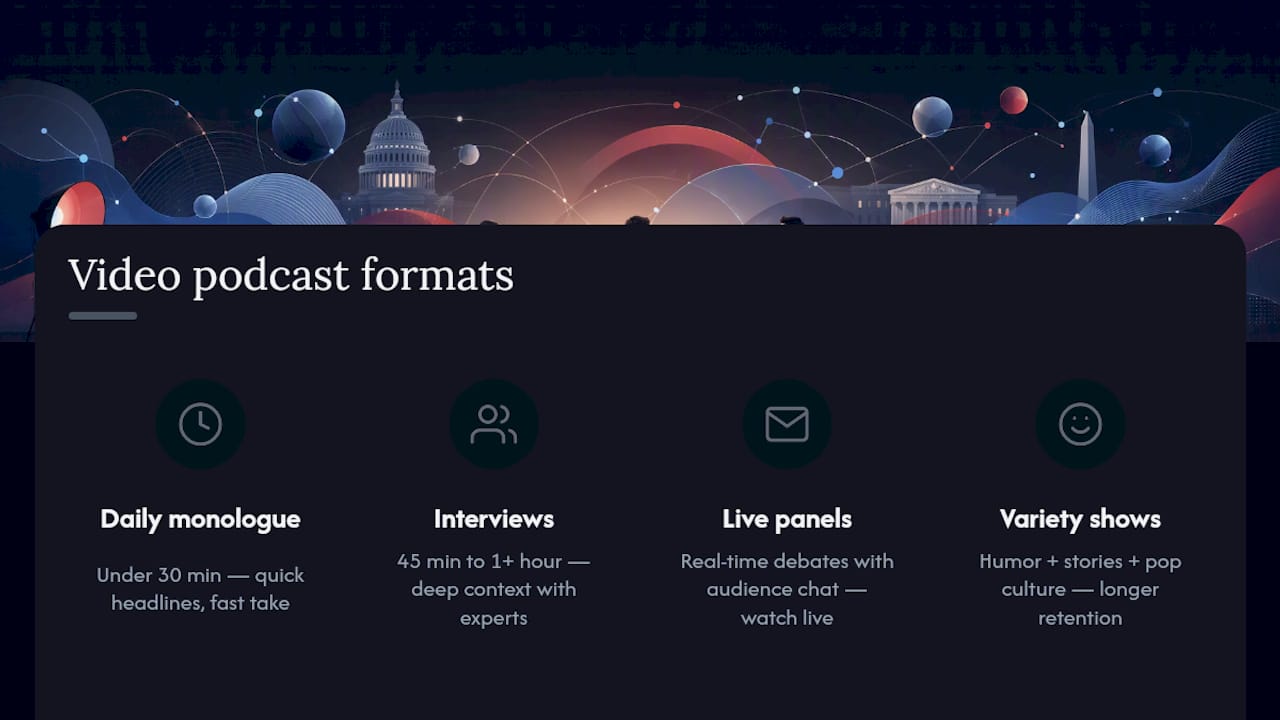
1. Daily monologue and commentary shows. These are your morning coffee shows: a host breaks down the day’s headlines with a clear point of view, usually in under 30 minutes. They work best as a quick catch-up before work, not as your only source of political content, since they trade depth for speed.
2. Interview-driven shows. These bring on lawmakers, authors, and policy experts for extended conversations that run 45 minutes to over an hour. If you want context behind a headline rather than a hot take about it, this is the format that delivers it.
3. Live panels and debate-style shows. Multiple hosts hash out an issue in real time, often with audience chat feeding into the conversation. These formats have grown especially common around contested topics like judicial nominations and foreign policy splits within the right, and they reward watching live rather than catching the replay later.
4. Variety and entertainment shows. These blend political commentary with humor, personal stories, and pop culture takes. Shows that mix in humor and personal storytelling tend to hold audiences longer than programs stuck in a pure news cycle, because nobody wants three hours of straight outrage.
Pro Tip: If you only have time for one format, start with a daily commentary show for headlines, then save interview episodes for the weekend when you can actually focus.
How to Find and Watch Video Conservative Podcasts
Finding a show is easy. Finding it reliably, every week, without losing track of which host went on hiatus, is the harder part.
Start with the right search approach for what you want:
- Use a show’s own page when you already know the host and want every episode in order.
- Use YouTube search or a channel page when you want to sample an episode before committing.
- Use an aggregator like GOPcast when you want to browse by topic or format without knowing exactly which show you’re looking for.
On GOPcast, you can browse shows by category, subscribe to the ones you like, and build a queue so you’re never stuck guessing what to watch next. On YouTube, subscribing and turning on notifications matters more than people think. Turn on the bell icon for a channel, and you’ll catch live streams the moment they start instead of finding out a day later. Playlists and video chapters also let you jump straight to the segment you care about instead of scrubbing through a full episode.
One scheduling note worth remembering: most shows run on a weekday cadence, with live events and specials breaking the pattern. Hosts occasionally step away entirely. High-profile hosts sometimes pause their programs for government appointments, as Monica Crowley did when she was sworn in as Chief of Protocol of the United States. A curated hub tracks that kind of status change so you’re not left refreshing a dead feed.
Why a Curated Hub Beats Scattered Searching
Fragmentation is the real problem conservative viewers face. Dozens of shows, dozens of platforms, and no single place that tracks which ones are active, on hiatus, or gone for good.
GOPcast exists to solve exactly that. It works as a unified hub that pulls conservative shows, including flagship programs like Bannon’s War Room and The Dan Bongino Show, into one place so you’re not bookmarking a dozen separate channels.
Curation matters beyond convenience, too. Editorial selection means:
- Host credentials get weighed, not just subscriber counts.
- Shows with weak signal-to-noise ratios get filtered out.
- Live streams, full archives, and individual show pages sit under one roof.
A hub that tracks show status, active, on hiatus, or ended, saves viewers from chasing feeds that quietly went dark months ago.
That kind of tracking sounds small until you’ve spent twenty minutes looking for a show that stopped uploading in March. For a deeper look at how these shows fit into the broader alternative media landscape, GOPcast’s overview of conservative news podcasts breaks down the format further.
How to Tell If a Conservative Podcast Is Credible
Credibility isn’t about whether a host agrees with you. It’s about whether they know what they’re talking about.
Start with background. Many conservative hosts carry government, military, or journalism experience that shapes how they analyze policy, and that experience is worth checking before you treat a take as gospel. When Monica Crowley was nominated for her ambassadorial role, her prior work in journalism and commentary was part of the record voters and viewers could evaluate. That’s the same standard worth applying to any host you’re about to spend hours a week listening to.
Look past the resume, too. A credible show cites sources, distinguishes reporting from opinion, and doesn’t need constant outrage to hold your attention. Shows built around actionable knowledge and debate tools tend to outlast ones running purely on alarm. Watch a couple of full episodes before subscribing, not just a clipped highlight reel; a highlight can make any host look sharper than a full 40 minute conversation actually plays out. Cross-check a host’s biggest claims against at least one outside source, even one you don’t fully trust, before repeating them yourself. That habit alone filters out most of the noise.
Best Devices and Apps for Watching Video Podcasts
Video conservative podcasts look and feel different depending on what you’re watching them on, and the right setup makes a real difference.
A smart TV or streaming device (Roku, Apple TV, Fire TV) gives you the best experience for long-form interviews and live panels, especially with a group watching together. For daily commentary you’re catching during a commute or lunch break, a phone or tablet works better, especially with a dedicated podcast app that supports background playback.
On the browser side, GOPcast’s site works directly without needing a separate app install, which matters if you’re switching between shows across categories rather than committing to one channel’s app. YouTube remains the default for many hosts because visual storytelling, graphics, charts, and personality-driven clips, adds context that audio alone can’t deliver. That’s part of why so many creators push viewers toward video platforms specifically rather than treating video as an afterthought to an audio show.
Whatever device you land on, look for one feature above all: the ability to save full episodes and highlight clips separately. A dual-path setup like that lets you queue full interviews for the weekend while grabbing a five-minute highlight when you’re short on time.
Independent Shows vs. Network-Backed Programs
The difference matters more than most viewers realize when they’re deciding who to trust.
Independent shows are typically built and funded by the host directly, often through listener support, sponsorships, or ad revenue tied to their own channel. They tend to move faster on controversial takes and often reflect one person’s unfiltered view, for better or worse. Network-backed shows, by contrast, sit under a larger media company’s production and editorial structure, which usually means more resources, consistent scheduling, and a team vetting claims before they air.
Neither structure automatically makes a show more trustworthy. An independent host with real policy or journalism experience can outperform a network show coasting on production budget. But knowing which structure you’re watching helps set expectations. Network shows tend to have backup coverage when a host is out; independent shows can go dark for weeks with no warning. Aggregators like GOPcast help bridge that gap by tracking both types under one roof, and by flagging when a show’s cadence changes so you’re not left wondering if a favorite host quietly walked away.
Building a Video Podcast Routine That Doesn’t Burn You Out
Pick one or two flagship daily shows for your morning routine and stick with them. Trying to keep up with six different daily commentary shows guarantees you’ll drop most of them within a month.
Save interview shows and live panels for a couple of nights a week when you actually have time to sit with a longer conversation. These formats reward attention you don’t have during a rushed morning scroll.
Playlists and watch-later queues exist for a reason. Use them instead of trying to watch everything the day it drops. A backlog of unwatched episodes is fine. A backlog that makes you feel guilty every time you open the app is not, and that’s usually a sign you subscribed to too much at once.
Start Watching on GOPcast Today
GOPcast pulls the shows you already want, live streams, full archives, and daily commentary alike, into one video-first hub instead of scattered channels and half-remembered bookmarks.

Whether your morning routine calls for a quick commentary show or your weekend has room for a full interview, GOPcast puts the video playback, subscriptions, and show archives in one browsable place. Start with the GOPcast homepage to see the full lineup, or head straight to The Dan Bongino Show if you already know where you want to start. Browse a category, hit subscribe, and your next episode is one click away.
Frequently Asked Questions
What are video conservative podcasts, exactly? They’re political commentary and news shows delivered in video format rather than audio-only, letting hosts use graphics, guest interviews, and live panel discussions that plain audio can’t capture as effectively.
Where can I watch conservative video podcasts for free? Most shows stream free on YouTube and on hubs like GOPcast, which aggregates full episodes and live streams from multiple hosts without requiring separate app downloads for each show.
How do I know if a conservative podcast is biased in a way that matters? Every show has a point of view, that’s the format. What matters is whether the host cites sources, distinguishes opinion from reporting, and has relevant background in policy, journalism, or government work.
What’s the difference between an independent and a network-backed show? Independent shows are typically run and funded by the host directly, while network-backed programs operate under a larger media company with more production support and steadier scheduling.
How often do conservative video podcasts release new episodes? Most daily commentary shows follow a weekday schedule, while interview and panel shows often air weekly, with live specials breaking the regular pattern around major news events.
Sources
- Monica Crowley sworn in as Chief of Protocol of the United States | Colgate University
- Presidency Project — Nomination statement referencing Monica Crowley