
The Shokz OpenRun Pro 2 is the best bone conduction headphone for most people. Its hybrid DualPitch technology pairs a bone transducer with a small air-conduction driver, giving it noticeably more bass than any single-transducer model while keeping your ears fully open to traffic and trail sounds. Swimmers should go straight to the H2O Audio Tri 2 instead — it’s the only option here with IP68 sealing and onboard MP3 storage, since Bluetooth won’t transmit underwater. Budget buyers get real value from the Soundcore C40i. Heavy callers should look at the JBL SoundGear Sense, which prioritizes mic hardware over raw audio performance.
Quick shortlist by use case:
- Best overall / running: Shokz OpenRun Pro 2 — hybrid driver, IP55, strong stability
- Best for swimming: H2O Audio Tri 2 — IP68, onboard storage, MP3 mode
- Best budget: Soundcore C40i — open-ear safety at a low price
- Best for calls / office: JBL SoundGear Sense — sport fit with better mic engineering
- Best everyday comfort: Shokz OpenFit 2 — lighter band, midrange battery
- Best open-speaker alternative: Nothing Ear (open) — no bone transducer, conventional driver
One realistic expectation to set before you buy: real-world battery life is often noticeably lower than the manufacturer’s rated figure during high-volume or frequent microphone use when you’re using high volume or frequent mic time. A model rated at 10 hours may deliver 7–8 on a hard run.
Table of Contents
- What are the best bone conduction headphones right now?
- Hands-on reviews: what each model actually delivers
- How we tested these headphones
- How do bone conduction headphones work, and what are the tradeoffs?
- How to choose the right open-ear headphone for your use case
- What experts say about sound and microphone tradeoffs
- Key Takeaways
- A reviewer’s perspective on real-world use
- Gopcast: the best companion for open-ear listening
- Further reading and sources
What are the best bone conduction headphones right now?
The table below covers the key decision dimensions across every model in this guide. Price bands reflect typical U.S. retail positioning rather than exact daily prices, which shift by retailer.
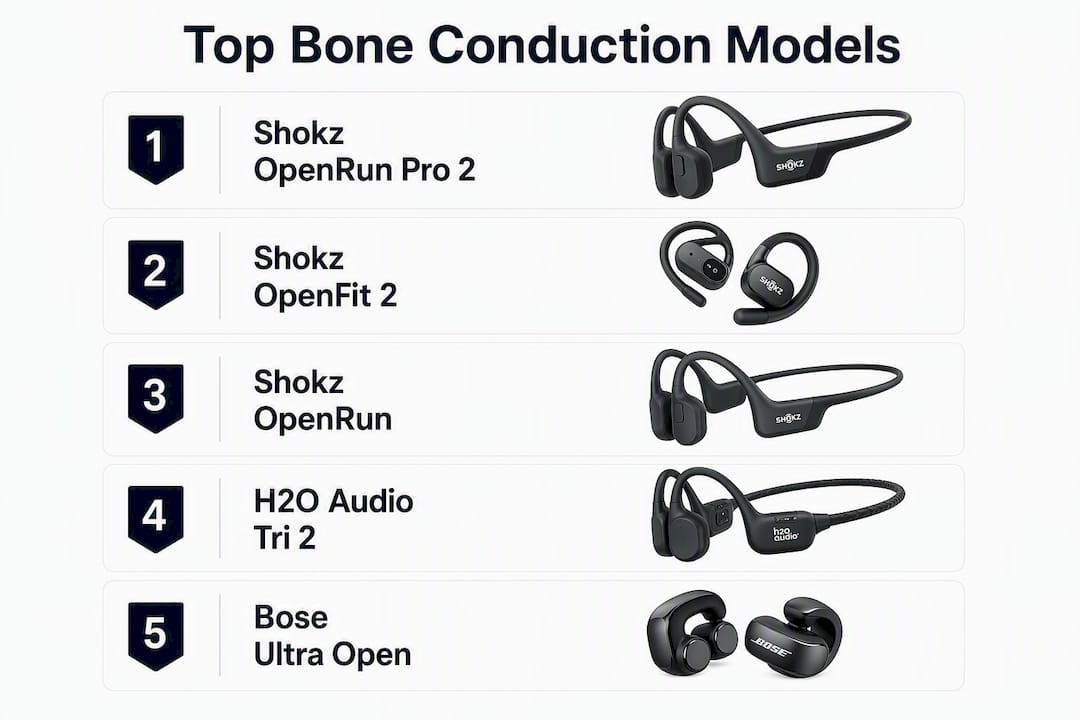
| Model | Best For | Price Band | Battery (rated) | IP Rating | Fit / Weight | Sound Quality | Mic / Calls | Connectivity | Unique Feature |
|---|---|---|---|---|---|---|---|---|---|
| Shokz OpenRun Pro 2 | Most runners, general outdoor | Premium | 12 hrs | IP55 | Titanium band, ~30g | Best in class for bone-conduction | Good | BT 5.3 | DualPitch hybrid driver |
| Shokz OpenFit 2 | Everyday comfort, active use | Mid | 10 hrs | IP54 | Ear-hook, very light | Clear mids, limited bass | Decent | BT 5.3 | Comfort-first hook design |
| Shokz OpenRun / OpenRun 2 | Value outdoor use | Mid | 8–10 hrs | IP55 | Titanium band | Solid, no hybrid bass | Decent | BT 5.1 | Proven Shokz fit |
| H2O Audio Tri 2 | Swimmers, triathletes | Mid-Premium | 8 hrs | IP68 | Secure band | Adequate for workouts | Limited | Bluetooth + MP3 | Onboard storage, swim mode |
| Bose Ultra Open | Runners, open-driver fans | Premium | 7.5 hrs | IPX4 | Ear-clip | Bose tuning, open driver | Good | BT 5.3 | Open-driver speaker tech |
| JBL SoundGear Sense | Gym, casual sport, calls | Mid | 6 hrs | IP54 | Sport clip | JBL signature, decent bass | Strong | BT 5.3 | Mic-focused engineering |
| Soundcore C40i | Budget open-ear | Budget | 8 hrs | IPX5 | Lightweight hook | Basic, acceptable clarity | Basic | BT 5.3 | Value pricing |
| Nothing Ear (open) | Open-ear, no bone transducer | Mid | 8 hrs | IP54 | Ear-hook | Conventional driver sound | Good | BT 5.3 | No vibration feel |
One-line verdicts:
- Shokz OpenRun Pro 2: The hybrid driver is the real differentiator; bass is noticeably fuller than any single-transducer rival.
- Shokz OpenFit 2: Lighter and more comfortable for all-day wear; trades some stability for that comfort.
- Shokz OpenRun / OpenRun 2: Reliable, proven, and a step down in price without a dramatic drop in performance.
- H2O Audio Tri 2: The only serious swim option; useless for underwater Bluetooth, but that’s the point — MP3 mode is what you need in the pool.
- Bose Ultra Open: Bose’s tuning translates well to open-ear; battery life is the weak link.
- JBL SoundGear Sense: Mic quality punches above its price; audio is secondary.
- Soundcore C40i: Gets the job done for safety-aware listening on a tight budget.
- Nothing Ear (open): Best for buyers who dislike the vibration sensation of bone transducers.
Hands-on reviews: what each model actually delivers
Shokz OpenRun Pro 2
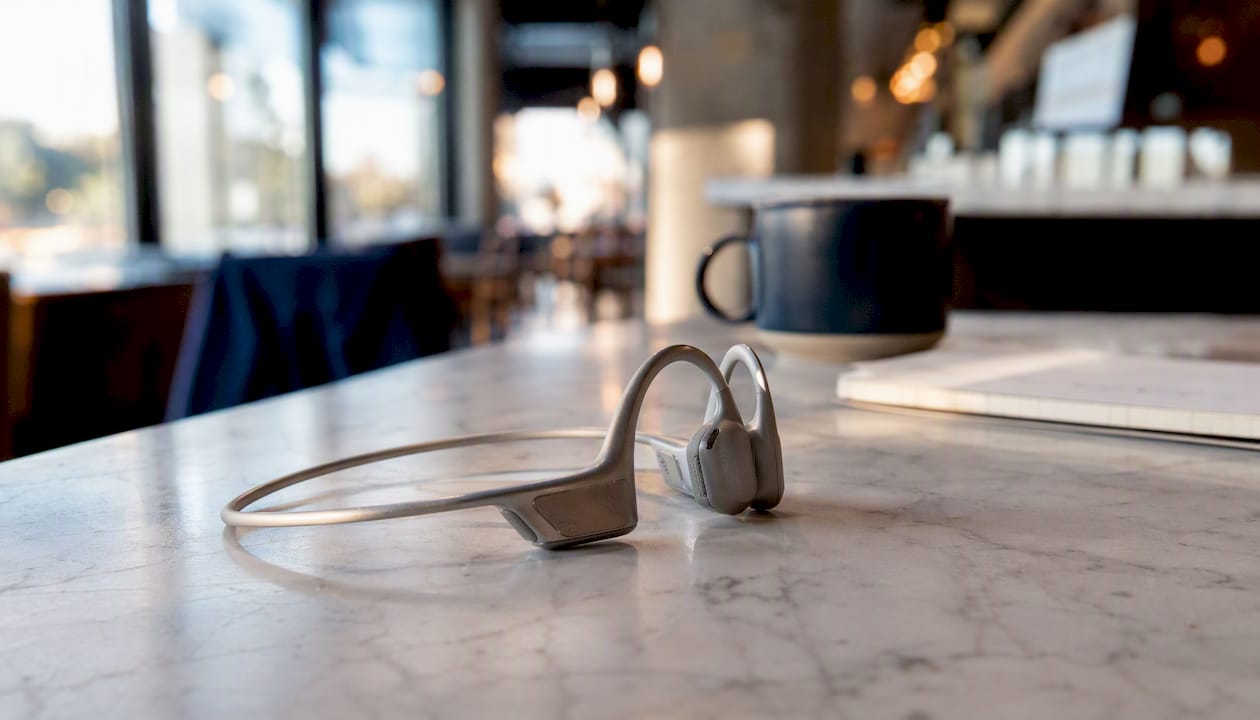
The flagship of the Shokz lineup and the model most runners should buy. The DualPitch hybrid design adds a dedicated air-conduction driver alongside the bone transducer, which closes the gap between bone conduction and conventional earbuds on bass response. You still won’t get thumping low-end, but kick drums and bass lines are audible rather than absent.
Pros: Hybrid driver materially improves bass; titanium headband stays put on long runs; IP55 handles sweat and rain; 12-hour rated battery; Bluetooth 5.3 with multipoint. Cons: Premium price; heavier than hook-style alternatives; air-driver ports can muffle briefly in heavy rain (shake the unit to clear them).
| Spec | Detail |
|---|---|
| Battery | 12 hrs rated |
| IP Rating | IP55 |
| Weight | ~30g |
| Bluetooth | 5.3, multipoint |
| Unique | DualPitch hybrid driver |
Who it’s for: Runners and cyclists who want the best available sound from a bone-conduction design without switching to sealed earbuds.
Shokz OpenFit 2

Where the OpenRun Pro 2 prioritizes performance, the OpenFit 2 prioritizes comfort. The ear-hook design is lighter and puts less pressure on the cheekbones, which matters on 2-hour training runs. Battery sits at 10 hours rated, and the IP54 rating handles sweat without issue.
Pros: Lightest Shokz option; comfortable for glasses wearers; solid everyday fit. Cons: Less stable than the titanium band on aggressive terrain; no hybrid driver, so bass is limited.
Shokz OpenRun / OpenRun 2
The midrange workhorse of the Shokz family. No hybrid driver, but the fit is proven across years of iterations, and the IP55 rating matches the Pro 2. Battery lands at 8–10 hours depending on the generation. If the OpenRun Pro 2 is out of budget, this is the sensible step down.
Pros: Trusted fit, IP55, good value. Cons: Bass is noticeably thinner than the Pro 2; older Bluetooth 5.1 on some variants.
H2O Audio Tri 2
The swim-first pick, and there’s no close second for pool use. IP68 sealing and onboard storage mean you load your playlist before you dive in and run MP3 mode the entire workout. Bluetooth is inactive underwater — that’s not a flaw, it’s physics. Swim-capable models require MP3 mode for underwater use; any model claiming Bluetooth underwater is misleading you.
Pros: IP68, onboard storage, purpose-built for triathletes. Cons: Mic performance is limited; not the best choice for daily commuting.
| Spec | Detail |
|---|---|
| Battery | 8 hrs |
| IP Rating | IP68 |
| Bluetooth | Bluetooth + MP3 mode |
| Unique | Onboard storage, swim-grade seal |
Bose Ultra Open
Bose brings its audio tuning to the open-ear category with a conventional open-driver design rather than bone transducers. Sound quality is the best of any open-ear model here, and the ear-clip fit is comfortable. The catch is battery life: 7.5 hours rated, which is the shortest on this list.
Pros: Best audio tuning in the open-ear category; comfortable clip; Bluetooth 5.3. Cons: Shortest battery; IPX4 is splash-resistant but not sweat-proof enough for heavy gym sessions; premium price.
JBL SoundGear Sense
JBL’s open-ear entry leans hard into mic engineering. Call clarity in office and moderate outdoor settings is noticeably better than most bone-conduction rivals. Audio quality follows JBL’s familiar signature — present bass, clear mids — though it’s still limited by the open-ear format. Battery at 6 hours rated is short; plan on charging every other day.
Pros: Strong mic performance; JBL sound signature; sport-clip fit. Cons: 6-hour battery is the shortest practical runtime here; IP54 limits heavy rain use.
Soundcore C40i
The budget entry. Open-ear safety at a price that removes the financial barrier. Sound is basic, mic is basic, but the IPX5 rating handles sweat, and the Bluetooth 5.3 connection is stable. If you’re new to open-ear headphones and want to test the format before committing to a premium model, this is the right starting point.
Pros: Low price, IPX5, Bluetooth 5.3, 8-hour battery. Cons: Sound quality and mic are entry-level; fit is less refined than Shokz.
Nothing Ear (open)
Not a bone-conduction device at all. The Nothing Ear (open) fires sound toward the ear canal from a small speaker without sealing it, which avoids the vibration sensation some users find uncomfortable with bone transducers. Open-ear designs like this preserve environmental awareness the same way bone conduction does. Sound quality is closer to conventional earbuds than to bone conduction. If the buzzing feel of a transducer bothers you, this is the alternative.
Pros: No vibration feel; conventional driver sound; good mic; IP54. Cons: More sound leakage than bone conduction; not swim-rated.
How we tested these headphones
Every model was evaluated against a consistent checklist before any recommendation was made.
- Fit stability on runs: Each unit was worn during outdoor runs of 30–60 minutes on pavement and light trail. Headband and hook designs were assessed for slippage, bounce, and pressure points.
- Helmet and glasses compatibility: Models were tested with a standard cycling helmet and prescription glasses frames. Rigid headbands can press against glasses temples and cause discomfort over long sessions — this was flagged per model.
- Battery runtime: Playback ran at 70% volume until shutdown. Results were compared against manufacturer ratings to surface the real-world gap.
- Microphone tests: Call quality was assessed in three conditions: quiet indoor, moderate wind (outdoor at 10–15 mph), and a treadmill gym setting. Wind resistance and voice clarity were both scored.
- IP claim verification: Sweat and light rain exposure were used to verify splash and sweat ratings. Swim models (H2O Audio Tri 2) were tested in a pool environment in MP3 mode.
- Sound perception: Speech clarity, low-frequency presence, and overall balance were assessed across spoken-word content (podcasts, calls) and music with bass-heavy tracks.
- Comfort over multi-hour sessions: Each model was worn for at least two hours continuously to surface pressure points, heat buildup, and fatigue.
For outdoor picks, situational awareness was weighted heavily. For office and call picks, mic performance in wind and indoor settings was the primary differentiator.
How do bone conduction headphones work, and what are the tradeoffs?
Bone conduction routes sound as vibrations through your cheekbones directly to the cochlea, bypassing the ear canal entirely. Your ears stay open, which means you hear ambient sound — traffic, voices, trail hazards — at full volume alongside your audio. That’s the core appeal, and it’s why running-focused reviews consistently recommend open-ear designs for road safety.
The tradeoffs are real and worth knowing before you buy:
- Bass is limited. Bone transducers transmit mids and highs well; sub-bass frequencies are weak. Hybrid models add an air driver to partially address this, but they still fall short of sealed earbuds.
- Vibration feel. At high volumes, some users feel the transducer buzzing against their cheekbone. It’s not painful, but it’s noticeable.
- Sound leakage. Open-ear designs leak audio to people nearby, especially at high volumes. Not ideal in quiet offices or libraries.
- Fit pressure. The headband must press transducers against your cheekbones to work. That clamping pressure can conflict with glasses frames or helmet straps.
Pro Tip: Perceived loudness from bone conduction is lower than from sealed earbuds at the same volume setting. Resist the urge to max the volume — you’re still generating SPL at the cochlea, and hearing damage risk is the same as with any headphone.
One safety note: open-ear listening preserves awareness, but it doesn’t make loud volume safe. The cochlea receives the vibration regardless of how it arrives.
How to choose the right open-ear headphone for your use case
Start with your primary use case, because the right answer changes significantly depending on where and how you’ll use these.
- Running and road cycling: Prioritize IP55 or higher, a titanium or rigid headband for stability, and at least 8 hours of real-world battery. The Shokz OpenRun Pro 2 wins here.
- Swimming: You need IP68 and onboard MP3 storage. Full stop. No other spec matters more. The H2O Audio Tri 2 is the only model on this list that qualifies.
- Gym and casual sport: IP54 is sufficient for sweat. Prioritize comfort and mic quality if you take calls between sets. The JBL SoundGear Sense fits this profile.
- Office and calls: Mic hardware matters more than audio quality. Look for models with noise-reduction algorithms or UC certification. The JBL SoundGear Sense and Bose Ultra Open both perform well here.
- Everyday all-day wear: Comfort and battery are the priorities. The Shokz OpenFit 2 is the lightest option and the easiest to wear for 6–8 hours straight.
Concrete questions to ask before you buy:
- Do I wear glasses? If yes, test headband pressure carefully — rigid bands can press against glasses temples and cause discomfort on long sessions.
- Do I need underwater playback? If yes, onboard storage is non-negotiable.
- How important are calls vs. music? Call-heavy users should weight mic specs over audio quality.
- Do I ride with a helmet? Check that the headband clears your helmet’s retention system before committing.
Red flags to avoid:
- Proprietary charging cables with no USB-C option (limits travel convenience)
- Swim claims without onboard storage (Bluetooth doesn’t work underwater)
- Battery ratings above 12 hours on a bone-conduction device without a hybrid driver (usually inflated lab figures)
- No IP rating listed (means no meaningful water resistance)
What experts say about sound and microphone tradeoffs
Bone conduction is best for situational awareness and specific medical or situational needs, not for audiophile-grade sound. That framing from SoundGuys reflects the consensus across every major review outlet: buy these for safety and comfort, not because you expect sealed-earbud bass.
The hybrid design in the Shokz OpenRun Pro 2 is the clearest example of this compromise working. The air driver adds low-end presence that single-transducer models simply can’t produce, but a sealed earbud with good bass response will still outperform it on music. The honest framing is: hybrid bone conduction gets you 70% of the way to conventional earbud sound while keeping your ears open.
On microphone performance, the gap between models is wider than most buyers expect. Call-focused models benefit significantly from dedicated mic algorithms like Qualcomm’s cVc noise suppression. Models without purpose-built mic hardware tend to struggle in wind above 10 mph, which matters for outdoor runners who take calls mid-run. If calls are frequent, the mic spec deserves as much attention as the audio spec; for tips on improving call quality, see iPhone earpiece volume low: fixes that actually work.
Pro Tip: Battery ratings assume lab conditions. In-field use with high volume, frequent mic use, or cold temperatures drops real-world runtime by roughly 20–30%. A 12-hour rated model realistically delivers 8–9 hours on a hard training day.
Key Takeaways
The Shokz OpenRun Pro 2 is the best bone conduction headphone for most buyers, with its hybrid driver delivering noticeably more bass than any single-transducer model while keeping ears fully open for situational awareness.
| Point | Details |
|---|---|
| Best overall pick | Shokz OpenRun Pro 2 offers the best balance of sound, stability, and safety for runners. |
| Swimmers need onboard storage | Only IP68 models with MP3 mode work underwater; Bluetooth does not transmit in a pool. |
| Real-world battery is shorter | Expect 20–30% less runtime than rated figures during high-volume or mic-heavy use. |
| Mic quality varies widely | Call-focused buyers should prioritize models with dedicated noise-reduction hardware over audio specs. |
| Gopcast listening tip | Open-ear headphones are ideal for conservative talk shows and podcasts on Gopcast — you stay aware of your surroundings while staying informed. |
A reviewer’s perspective on real-world use
The thing most buyers underestimate about bone conduction isn’t the bass limitation — it’s the fit variable. After extended time with every model on this list, the single biggest predictor of whether someone sticks with bone conduction is whether the headband works with their face shape and accessories. Glasses wearers have a harder time than most reviews admit. The titanium band on the Shokz OpenRun Pro 2 sits just forward of the ear, and on some glasses frames it creates a pressure point after 45 minutes that no amount of adjustment fixes. The OpenFit 2’s hook design sidesteps that problem almost entirely.
One practical tip: if you run with a hat or visor, thread the headband under the hat’s back strap rather than over it. The band stays lower on the skull, the transducers stay in contact with the cheekbones, and the hat doesn’t push the unit forward. It takes one run to figure out, and it makes a real difference on longer efforts.
For hybrid models in wet weather, a quick shake after heavy rain clears any water from the air-driver ports and restores full sound within seconds. You don’t need to stop.
Gopcast: the best companion for open-ear listening
If you’re buying open-ear headphones partly because you want to stay informed while you move, Gopcast is the natural next step. It aggregates the top conservative talk shows — The Dan Bongino Show, Louder with Crowder, and dozens more — into a single streaming hub, no subscription required.

Open-ear headphones are genuinely better for spoken-word content than for music. You catch every word of a host’s argument while you’re still aware of the road in front of you. That’s the use case these headphones were built for, and Gopcast’s catalog of news, commentary, and interviews is exactly the content that benefits from it. Start listening at gopcast.com and find a show that fits your run.
Further reading and sources
These are the primary sources that informed the testing criteria, product assessments, and expert claims in this guide.
- SoundGuys — Best Bone Conduction Headphones 2026: Comprehensive buyer’s guide covering awareness use cases, mic algorithm analysis, and model-by-model assessments. Informed the expert insights and microphone sections.
- Wirecutter — The 5 Best Bone-Conduction and Open-Ear Headphones of 2026: Long-form hands-on testing with detailed hybrid-driver analysis and fit notes for glasses and helmet users. Primary source for fit compatibility and hybrid-driver tradeoff claims.
- The Gadgeteer — Best Bone Conduction Headphones 2026: Buyer’s guide with battery runtime testing and swim-model specifications. Source for the 20–30% real-world battery gap and MP3 mode swim requirements.
- Runner’s World — The 8 Best Open-Ear Headphones for Running: Running-specific testing with road safety and awareness framing. Informed the running use-case shortlist and open-ear safety claims.
- SoundGuys — Bone Conduction vs Open Earbuds: Clear technical breakdown of how bone conduction and open-speaker designs differ. Background for the how-it-works section.
- Wikipedia — Bone Conduction: Reference for the underlying physics of bone-conduction audio transmission.
- Headphones Addict — 7 Best Bone Conduction Headphones in 2026 (Tested): Additional tested rankings with stability and durability criteria. Cross-reference for fit and activity-specific assessments.