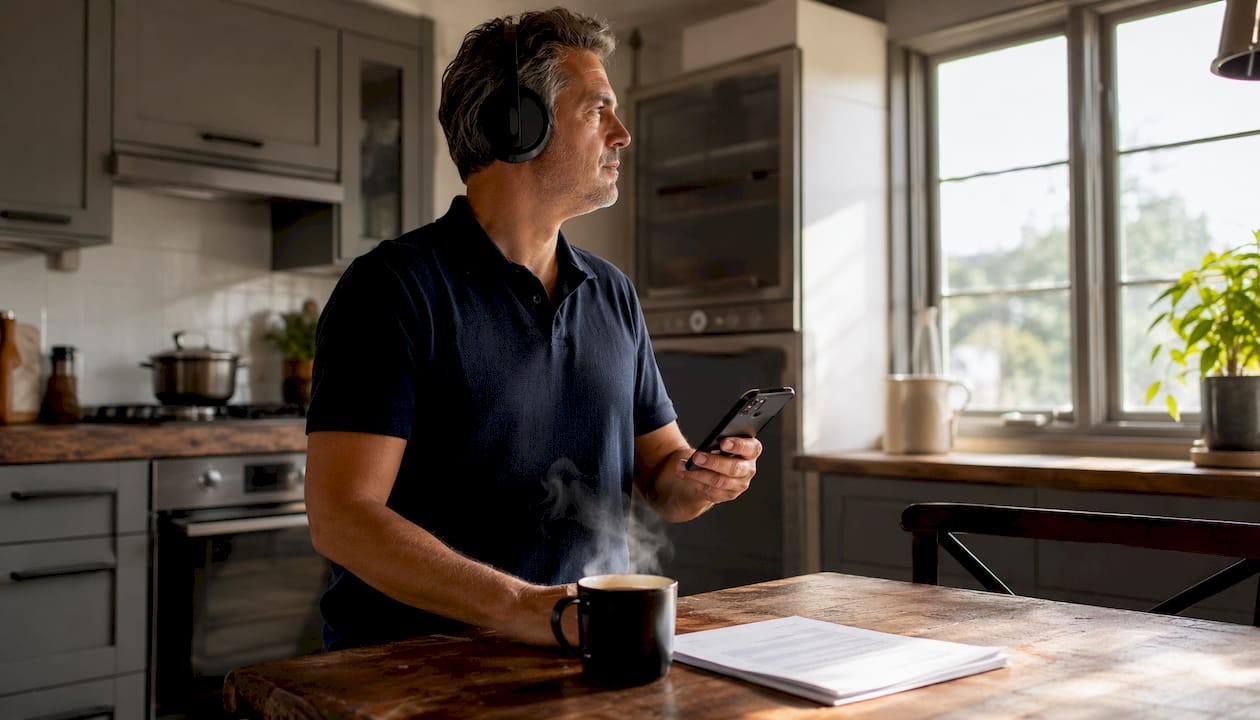
If you want the short answer: the best conservative news podcasts right now are The Ben Shapiro Show (daily news with sharp commentary), The Dan Bongino Show (hard-hitting political analysis), The Charlie Kirk Show (culture and campus politics), The Megyn Kelly Show (long-form interviews with a journalist’s instincts), The Matt Walsh Show (culture-war commentary), and The Federalist Radio Hour (policy-focused depth). Each one fills a different slot in a listening week.
Here’s the quick-reference list:
- The Ben Shapiro Show — best for fast-paced daily news and debate-style commentary
- The Dan Bongino Show — best for political analysis and pushback on mainstream narratives
- The Charlie Kirk Show — best for campus politics, culture, and youth conservative issues
- The Megyn Kelly Show — best for long-form interviews with journalists and political figures
- The Matt Walsh Show — best for culture-war commentary and social issues
- The Federalist Radio Hour — best for policy depth and intellectual conservative debate
- Mark Levin Podcast — best for constitutional law and radio-style passionate monologue
- The Michael Knowles Show — best for Catholic conservative perspective and cultural critique
- The Glenn Beck Program — best for historical context and liberty-focused analysis
- Louder with Crowder — best for comedy-infused political commentary and debate segments
These picks reflect three selection signals: host credibility (documented journalism background, elected office, or major network affiliation), consistent release schedules, and measurable audience visibility through chart positions and publisher networks.
Table of Contents
- What are the best conservative news podcasts right now?
- How do you choose the right conservative podcast for your listening goals?
- Where can you listen to conservative podcasts?
- What does Gopcast offer conservative podcast listeners?
- Key Takeaways
- The case for listening with a system, not just a list
- Start listening on Gopcast today
- Useful sources and where to learn more
What are the best conservative news podcasts right now?
The ten shows below represent the range of formats, tones, and topics you’ll find across the conservative podcast world. Conservative podcasts vary widely in length and format, from 20-minute news briefs to 100-plus-minute extended episodes, with many flagship daily shows releasing Monday through Friday.

The Ben Shapiro Show
Best for: Daily news briefings and debate-style commentary | Format: Monologue with news analysis | Length: 45–75 min | Frequency: Monday–Friday | Tone: Fast-paced, combative, data-driven
Ben Shapiro built his audience on the premise that facts don’t bend to political pressure. The show opens with rapid-fire news breakdowns, moves into cultural commentary, and closes with listener questions or debate clips. Shapiro’s background as a Harvard Law graduate and bestselling author gives the show a distinctly legalistic edge. It’s published through the Daily Wire network, which also operates a subscription app for ad-free listening. A good starting episode: any “Leftist Meltdown” segment during a major news week.
The Dan Bongino Show
Best for: Political analysis and anti-establishment commentary | Format: Monologue and interview | Length: 45–60 min | Frequency: Monday–Friday | Tone: Aggressive, insider-focused, conspiratorial-adjacent
Bongino is a former Secret Service agent and NYPD officer, which gives his national-security and law-enforcement commentary a firsthand credibility most hosts can’t match. The show consistently ranks among the top conservative talk shows on major platforms. You can follow it directly on Gopcast’s Dan Bongino page without hunting across apps. Start with any episode covering FBI or DOJ oversight.
The Charlie Kirk Show
Best for: Campus politics, youth conservatism, and culture | Format: Monologue and interview | Length: 30–60 min | Frequency: Monday–Friday | Tone: Energetic, populist, confrontational
Kirk founded Turning Point USA and has spent years debating students on college campuses, which makes his show unusually focused on the generational battle for conservative ideas. Episodes frequently feature college students, elected officials, and movement figures. The format shifts between solo commentary and sit-down interviews, keeping the pacing varied.
The Megyn Kelly Show
Best for: Long-form interviews and media criticism | Format: Interview-driven | Length: 60–90 min | Frequency: Monday–Friday | Tone: Journalistic, direct, occasionally confrontational
Kelly’s two decades at Fox News and NBC give her show a professional-media credibility that separates it from pure opinion programming. She asks follow-up questions most podcast hosts skip. The show covers politics, media bias, and cultural flashpoints, often with guests who disagree with each other. If you want a conservative podcast that still feels like journalism, this is the one.
The Matt Walsh Show
Best for: Culture-war commentary and social conservatism | Format: Monologue with clips | Length: 45–60 min | Frequency: Monday–Friday | Tone: Blunt, Catholic-inflected, deliberately provocative
Walsh is a Daily Wire contributor known for the documentary What Is a Woman? His show focuses almost entirely on social and cultural issues: gender ideology, education, family policy. It’s not a news-brief show. Walsh picks one or two topics per episode and goes deep, which makes it better for listeners who want sustained argument over headline coverage.
The Federalist Radio Hour
Best for: Policy depth and intellectual conservative debate | Format: Interview and panel | Length: 30–50 min | Frequency: Several times per week | Tone: Analytical, policy-focused, less combative than most
The Federalist is a conservative publication with a reputation for publishing serious policy analysis, and the podcast reflects that. Guests include think-tank researchers, legal scholars, and journalists. The tone is closer to a policy seminar than a talk-radio show. If you want to understand why a conservative position exists rather than just hear it asserted, this is the right show.
Mark Levin Podcast
Best for: Constitutional law and passionate radio-style commentary | Format: Monologue | Length: 30–60 min | Frequency: Monday–Friday | Tone: Intense, legally grounded, historically referenced
Levin is a former Reagan administration official and constitutional lawyer. His show is essentially his syndicated radio program in podcast form, and radio-origin shows like this often release extended or “director’s cut” podcast episodes with longer, unedited segments. Levin’s strength is connecting current events to constitutional principles. Start with any episode on executive power or Supreme Court decisions.
The Michael Knowles Show
Best for: Catholic conservative perspective and cultural critique | Format: Monologue with news clips | Length: 45–60 min | Frequency: Monday–Friday | Tone: Dry, sardonic, culturally conservative
Knowles is a Yale-educated Daily Wire host whose commentary sits at the intersection of Catholic social teaching and political conservatism. The show is sharper on cultural and religious issues than on economic policy. His delivery is more measured than Shapiro or Bongino, which some listeners prefer for longer commutes.
The Glenn Beck Program
Best for: Historical context and liberty-focused analysis | Format: Monologue and interview | Length: 60–120 min | Frequency: Monday–Friday | Tone: Philosophical, historical, occasionally apocalyptic
Beck has been a fixture in conservative media since his Fox News days. His show now runs through the Blaze Media network and tends to frame current events through a historical or constitutional lens. Episodes can run long, but the depth is genuine. Beck’s background as a self-taught historian gives the show a different texture from the law-and-order focus of Bongino or the culture-war focus of Walsh.
Louder with Crowder
Best for: Comedy-infused political commentary and debate | Format: Panel and debate segments | Length: 60–120 min | Frequency: Several times per week | Tone: Comedic, confrontational, debate-oriented
Steven Crowder built his audience through the “Change My Mind” debate format, where he argues a conservative position in public and invites challengers. The show blends political commentary with sketch comedy and live debate, which makes it genuinely different from the monologue-heavy competition. You can listen to Louder with Crowder free on Gopcast.
Comparison table
| Show | Best for | Format | Typical length | Frequency | Tone | Where to listen | Sample episode |
|---|---|---|---|---|---|---|---|
| The Ben Shapiro Show | Daily news + debate | Monologue | 45–75 min | Mon–Fri | Fast, combative | Apple, Spotify, Daily Wire | Any “Leftist Meltdown” ep |
| The Dan Bongino Show | Political analysis | Monologue/interview | 45–60 min | Mon–Fri | Aggressive, insider | Apple, Spotify, Gopcast | FBI oversight episode |
| The Charlie Kirk Show | Campus/youth politics | Monologue/interview | 30–60 min | Mon–Fri | Populist, energetic | Apple, Spotify, YouTube | Campus debate episode |
| The Megyn Kelly Show | Long-form interviews | Interview | 60–90 min | Mon–Fri | Journalistic, direct | Apple, Spotify, SiriusXM | Media-bias roundtable |
| The Matt Walsh Show | Culture-war commentary | Monologue | 45–60 min | Mon–Fri | Blunt, provocative | Apple, Spotify, Daily Wire | Gender ideology deep dive |
| The Federalist Radio Hour | Policy depth | Interview/panel | 30–50 min | Several/week | Analytical, measured | Apple, Spotify | Constitutional law episode |
| Mark Levin Podcast | Constitutional law | Monologue | 30–60 min | Mon–Fri | Intense, legal | Apple, Spotify, iHeart | Executive power episode |
| The Michael Knowles Show | Catholic conservatism | Monologue | 45–60 min | Mon–Fri | Dry, sardonic | Apple, Spotify, Daily Wire | Cultural critique episode |
| The Glenn Beck Program | Historical context | Monologue/interview | 60–120 min | Mon–Fri | Philosophical, historical | Apple, Spotify, Blaze | Liberty and history ep |
| Louder with Crowder | Comedy + debate | Panel/debate | 60–120 min | Several/week | Comedic, confrontational | Apple, Spotify, Gopcast | “Change My Mind” segment |
Pro Tip: Before committing to a show, listen to three consecutive episodes rather than one. A single episode can be atypically good or bad. Three in a row reveals the real format, pacing, and host reliability.
Edison Research finds that conservative political podcasts are distinctly host-centric, revolving around a single recognizable voice rather than rotating casts. That structure is what drives the loyal, returning audiences these shows build. It also means the host is the product: if you don’t connect with the voice in episode one, move on.
These picks were selected on three criteria: host credentials verifiable through public record (journalism background, legal training, elected office, or major network affiliation), consistent release schedules with documented episode archives, and audience visibility through chart positions and publisher networks.
How do you choose the right conservative podcast for your listening goals?
Start with format and time. A 20-minute commute calls for a different show than a 90-minute gym session. The format question comes before the host question.
Selection criteria checklist:
- Host credentials: Can you verify the host’s background? Former journalist, lawyer, elected official, or network anchor are all checkable. Vague “media personality” claims with no traceable history are a yellow flag.
- Episode length and frequency: Daily shows suit listeners who want a news habit. Several-times-per-week shows work better for deeper dives. Match the release schedule to how often you actually listen.
- Production quality: Consistent audio, clear editing, and reliable episode delivery signal a professional operation. Frequent technical problems or irregular posting suggest an underfunded or disorganized production.
- Audience reach evidence: Chart positions on Apple Podcasts or Spotify, publisher network affiliation (Daily Wire, Blaze, iHeart), and documented download estimates from third-party sources like FeedSpot all indicate genuine reach. Hosts who cite their own download numbers without any third-party corroboration deserve skepticism.
- Sample episode test: Three recent episodes, back to back. Does the host correct errors? Do guests get challenged? Is the sourcing traceable?
- Subscription and paywall signals: Major conservative networks have expanded into subscription apps that offer ad-free or exclusive content. Know before you subscribe whether the free feed is the full show or a teaser.
- Community engagement: Live chat, active social accounts, and listener Q&A segments all indicate an engaged audience. Edison Research notes that conservative podcasts are frequently used as community-building tools, with hosts cultivating strong direct connections with listeners.
Red flags to watch for:
- Consistent factual errors that go uncorrected across multiple episodes
- Guests whose credentials can’t be verified through a basic search
- Paywalled content presented as the “essential” version of a free feed
- Download claims with no third-party source to back them up
- Hosts who position every episode as a breaking exclusive without documented sourcing
Pro Tip: To evaluate a show’s bias and reliability quickly, search the host’s name plus “correction” or “retraction.” A host who never publicly corrects errors isn’t necessarily more accurate — they’re just less accountable. Then check whether the show’s publisher has an editorial standards page.
Where can you listen to conservative podcasts?
Most right-wing news podcasts are available on Apple Podcasts, Spotify, YouTube, and iHeart. The practical question is which platform fits your listening habits and whether you want a curated experience or a general-purpose app.
Major distribution options:
- Apple Podcasts: The default for iPhone users. Strong search, reliable notifications, and most conservative shows maintain verified show pages here. No subscription required for free episodes.
- Spotify: Strong on discovery and playlist features. Some shows have Spotify-exclusive content or early access for premium subscribers.
- YouTube: Many hosts publish full video versions, which adds a visual layer useful for panel shows and debate segments. Louder with Crowder’s “Change My Mind” segments, for example, work better on video.
- iHeart: Strong for radio-origin shows like Mark Levin, which have deep iHeart distribution through syndication deals.
- Direct network apps: The Daily Wire app and Blaze TV app offer ad-free and exclusive content for subscribers. Worth it if you listen to multiple shows on the same network.
- RSS readers: Apps like Overcast or Pocket Casts let you subscribe to any show’s RSS feed and manage your own playlist. More control, more setup.
- Gopcast: A curated hub that centralizes conservative shows into a single portal, with live and recorded streams, category browsing, and show pages for quick discovery. No account required to start listening.
How to follow multiple shows without losing track:
- Pick your primary platform (Apple Podcasts or Spotify for most listeners).
- Subscribe to your top three shows and let the feed auto-update.
- Create a playlist or queue for your daily listening slot (morning commute, gym, evening walk).
- Set playback speed to 1.25x or 1.5x to get through longer episodes faster without losing comprehension.
- Enable notifications for shows you follow live, especially those with breaking-news episodes.
- For live content, check America’s Voice Live on Gopcast as an example of how aggregators handle real-time streaming alongside recorded archives.
Pro Tip: Use Gopcast’s category browsing to find shows you haven’t heard of yet. The platform organizes content by topic (news, commentary, interviews, activism, health, comedy) so you can discover niche programs without wading through a general-purpose search engine.
What does Gopcast offer conservative podcast listeners?
Gopcast is a single-portal hub built specifically for conservative podcast content. Instead of managing subscriptions across five different apps, you get curated categories, show pages, and live streaming in one place.
What the platform provides:
- Curated show pages for major programs, including The Dan Bongino Show, Louder with Crowder, The Trey Gowdy Podcast, and The Fox News Rundown
- Category browsing across news, commentary, interviews, activism, health, comedy, and investigative content
- Live and recorded streams so you can catch shows in real time or listen to archives on your schedule
- No paywall for listeners: access is free, which removes the friction of deciding whether a subscription is worth it before you’ve sampled the content
- Content breadth beyond pure politics: shows like the Fox True Crime Podcast and the No Agenda Show illustrate that the platform covers conservative-aligned programming across genres
The platform’s value is discovery. When you already know you want conservative commentary but aren’t sure which show fits your schedule, Gopcast’s curated structure cuts the search time significantly. Edison Research notes that host-centric formats drive the strongest listener loyalty in conservative podcasting, and Gopcast’s show pages are built around exactly that structure: one host, one page, easy follow.
Pro Tip: Build a morning playlist on Gopcast by adding a 20–30 minute news show (like the Fox News Rundown) plus one longer commentary show for your commute or workout. That two-show stack covers headlines and depth without requiring you to manage multiple apps.
Key Takeaways
The strongest conservative news podcasts are host-centric, consistent, and matched to a specific listening goal — daily news briefings, long-form interviews, or culture commentary — and Gopcast centralizes the best of them in one free portal.
| Point | Details |
|---|---|
| Match format to your schedule | Daily 45–75 min shows suit commuters; 60–120 min panel shows work better for gym or weekend listening. |
| Host credentials are the first filter | Verify journalism, legal, or elected-office backgrounds before committing to a show’s analysis. |
| Three-episode test before subscribing | Three consecutive episodes reveal real format and reliability better than any single standout episode. |
| Watch for paywall traps | Major networks offer subscription apps; confirm whether the free feed is complete before paying. |
| Gopcast simplifies discovery | The platform aggregates top conservative shows in one free portal with live streams and category browsing. |
The case for listening with a system, not just a list
The conventional advice is to pick a show and subscribe. What that misses is that the best conservative podcast listening isn’t about finding the show — it’s about building a stack that covers different functions. A daily news brief handles headlines. A long-form interview show handles depth. A culture-commentary show handles the issues that don’t fit neatly into either.
The host-centric nature of this space, which Edison Research identifies as a defining feature of conservative political podcasting, is actually an advantage for listeners who think this way. Because each host has a consistent voice and predictable format, you can slot them into your week with confidence. Shapiro for Monday morning news. Megyn Kelly for a Wednesday interview. Matt Walsh for a Friday culture deep dive. The consistency that makes these shows feel repetitive to critics is exactly what makes them reliable for listeners who want a structured information diet.
What most listeners underestimate is how much the platform matters. Hunting across Apple Podcasts, Spotify, YouTube, and network apps for the same shows wastes time and fragments your listening history. An aggregator like Gopcast solves that by putting the shows in one place, which means you spend more time listening and less time searching.
Start listening on Gopcast today
Gopcast is the fastest way to follow the shows on this list without juggling five different apps. Every program covered here, from daily news briefings to long-form interview shows, is accessible through a single free portal with no subscription required to start.

Head to Gopcast and browse by category or search for a specific host. If you’re not sure where to start, the Dan Bongino Show page is a solid first stop for political analysis, or go straight to Louder with Crowder if you want something with more edge and humor. Both are free to stream, no account needed. Pick a show, hit play, and see what fits your week.
Useful sources and where to learn more
- FeedSpot: 100 Best Conservative Podcasts — Curated rankings with estimated monthly listener ranges and episode-length notes; useful for comparing audience visibility across shows.
- Edison Research: Top Podcasts with Conservative or Liberal Content — Industry-level data on conservative podcast formats, host-centric audience dynamics, and listener loyalty patterns.
- The Ben Shapiro Show on Daily Wire — Official show page with episode archives and subscription options for the Daily Wire network.
- The Ben Shapiro Show on Apple Podcasts — Apple Podcasts listing with listener reviews and episode history; useful for checking release consistency.
- The Daily Wire Channel on Apple Podcasts — Full network page covering Shapiro, Knowles, Walsh, and other Daily Wire shows; useful for understanding the multi-show subscription model.
- Gopcast Show Directory — The platform’s full show listing, organized by category; the fastest way to browse and follow multiple conservative programs in one place.
- Young America’s Foundation: 11 Conservative Podcasts — A curated list from a major conservative youth organization; useful for cross-referencing show recommendations with an institutional conservative perspective.
- The Kevin Roberts Show on Apple Podcasts — Weekly policy-focused show from The Heritage Foundation president; a good example of institutional conservative commentary with documented credentials.