
Follow policy-focused shows that cite primary budget documents, appropriations text, or agency filings rather than shows that just react to headlines. Start with a curated conservative feed on GOPcast, then add a deep-dive defense show and a state or local finance podcast to round out the picture. Expect episodes to range from tight 20-minute explainers to hour-long interviews, and treat this guide as your shortlist plus a starter playlist.
TL;DR:
- The most credible budget podcasts analyze primary documents, such as appropriations bills and agency reports, rather than relying on headlines or slogans.
- Shows like Budget Watchdog All Federal identify nearly 500 billion dollars in defensible Pentagon cuts, measured against a 1.54 trillion dollar budget request.
- State and local finance podcasts focus on municipal budgets, school funding, and pension obligations, which rarely attract national attention but directly affect local taxes and services.
- Listening to episode types like line-item cut analyses or markup explainers enhances understanding of how fiscal decisions are made and verified.
- Checking show notes for linked primary sources helps ensure the credibility of weekly or biweekly shows, especially when sourcing claims from official documents.
Table of Contents
- The Best Spending Cuts Podcasts to Follow Right Now
- What These Shows Actually Cover, From the Pentagon to Your School Board
- How to Choose the Right Podcast for Your Goals and Time
- Starter Episodes to Learn the Basics Fast
- How to Tell a Credible Spending Cuts Podcast From a Loud One
- Find Conservative Spending-Cuts Coverage on GOPcast
- Why Podcasts Cut Through the Budget Noise
- Sources
The Best Spending Cuts Podcasts to Follow Right Now
The strongest shows in this space share one habit: they work from paperwork, not press releases. Some episodes read like a forensic accountant walking through an appropriations bill; others feel more like a conversation with someone who used to write those bills. Here’s where to start building a rotation.
- Budget Watchdog All Federal (Taxpayers for Common Sense). Long-form, document-driven episodes that walk through specific line items rather than vague “cut waste” rhetoric. One installment identified nearly $500 billion in defensible cuts to Pentagon acquisition programs, measured against a Pentagon budget request of roughly $1.54 trillion. Episodes run 30 to 45 minutes and post on a regular biweekly schedule.
- Public Money Pod (Center for Municipal Finance). This one covers the roughly $4 trillion that state and local governments spend annually, which is the layer of government most listeners never hear discussed on national news. Good for anyone tracking school district budgets or municipal bond debates.
- Policy30. A companion short-format model from the same municipal-finance world, built for under-30-minute episodes that connect policy shifts to market reactions without the technical overload of a full markup breakdown.
- IIF Podcasts (Institute of International Finance). Weekly and monthly episodes that put U.S. fiscal decisions in a global finance context, useful when a domestic spending fight has ripple effects on markets abroad.
- NPR Politics Podcast, debt and deficit episodes. Not a dedicated budget show, but its explainer format, including “The Big Deal With a Big Debt,” translates trillion-dollar figures into what they mean for an actual household.
- GOPcast conservative talk lineup. For listeners who want spending debates filtered through a right-leaning lens alongside broader political commentary, GOPcast aggregates conservative shows discussing federal overreach, budget fights, and fiscal accountability in one feed. Check the conservative news podcasts category to browse current options.
Avoid shows that lean entirely on outrage without linking to the underlying bill text or report. If a host cites a number without telling you where it came from, that’s a signal to keep looking.
What These Shows Actually Cover, From the Pentagon to Your School Board
Spending cuts coverage splits into two altitudes, and mixing them up is the most common mistake new listeners make. Federal-level shows deal with national debt trajectories, Pentagon acquisition programs, and the reconciliation process that lets Congress push through big fiscal packages on a simple-majority vote. State and local shows deal with school district budgets, municipal bond ratings, and pension obligations, subjects that rarely make national news but affect property taxes and local services directly.
Recurring episode formats include:
- Cut-list episodes, where a host walks through specific programs flagged for reduction, often line by line.
- Markup explainers, which follow a bill through committee amendments before a floor vote.
- Expert interviews, where hosts bring in economists, former agency officials, or budget analysts for added texture.
- Market-policy crossover shows, which connect a spending decision to bond yields or currency moves.
Pro Tip: Open the show notes before you hit play. If an episode links to the actual appropriations bill or agency report, you can fact-check the host’s claims in five minutes instead of taking them on faith.
How to Choose the Right Podcast for Your Goals and Time
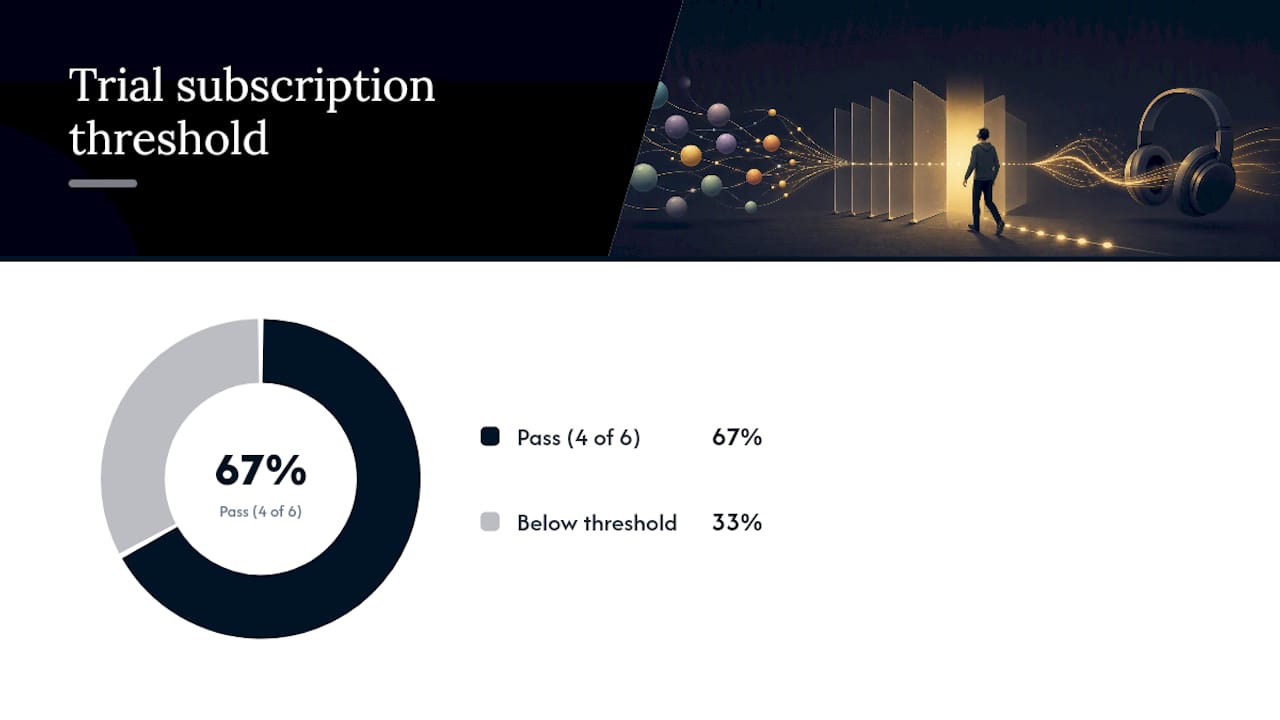
Not every show fits every listener, and the wrong match usually shows up fast, either you’re bored by too much minutiae, or you’re frustrated by too little. Four factors decide the fit: depth versus brevity, how well the host sources claims, ideological framing, and how consistently new episodes actually appear.
Run through this checklist before subscribing to anything new:
- Does the episode length match your actual commute or workout window, or will you abandon it halfway through?
- Does the host reference specific bill numbers, agency reports, or FOIA documents, rather than general talking points?
- Are show notes provided with working links to primary sources?
- Is the framing neutral analysis, policy advocacy, or partisan commentary, and does that match what you’re looking for today?
- How often does the show actually publish, weekly, biweekly, or sporadically?
- Does the host bring in outside experts, or is it a single-voice monologue every episode?
A show that nails four of six is worth a trial subscription. A show that fails the sourcing question outright probably isn’t worth your feed slot, no matter how entertaining the host is.
Starter Episodes to Learn the Basics Fast
Four episode types will teach you more about how spending cuts actually get identified and fought over than months of scattered headline-reading. Queue these up in order.
- A cut-list episode, like the Budget Watchdog breakdown of Pentagon acquisition programs. Listen for how the host separates a defensible line-item cut from a vague slogan about waste.
- A legislative markup explainer. Listen for how committee amendments change a bill’s final numbers before it ever reaches a floor vote.
- A municipal-budget case study, drawn from the Public Money Pod’s local finance coverage. Listen for how a school board or city council balances competing service demands against a fixed revenue base.
- A macro-to-micro explainer, such as NPR’s debt episode. Listen for the moment the host converts a trillion-dollar figure into a household-level comparison.
After all four, you should understand the difference between a specific, verifiable cut and a talking point, plus how to read a show’s linked documents on your own.
How to Tell a Credible Spending Cuts Podcast From a Loud One
Credibility in this genre comes down to paperwork, not volume. The clearest signal is whether a host argues from a specific program or acquisition line item rather than a slogan, since a defensible cut can be checked against a document and a vague one cannot.
Run through these checks before trusting a show’s numbers:
- Does the host have a policy, journalism, or budget-analysis background, or is commentary the entire résumé?
- Do episodes include timestamps and linked show notes pointing to the underlying report?
- Does the guest list include actual subject-matter experts, not just fellow commentators?
- Does the host explain the mechanism, appropriations, reconciliation, continuing resolutions, that makes a cut possible in the first place?
Many podcast platforms organize conservative shows by category so listeners can compare host backgrounds and episode focus before committing a feed slot, rather than guessing from a thumbnail and a title.
Find Conservative Spending-Cuts Coverage on GOPcast
Some platforms pull conservative political podcasts into one feed so you’re not hunting across multiple apps to find a host who actually talks fiscal policy instead of just yelling about it. These platforms curate shows by topic, host, and format, which makes it easier to land on programs that treat budget fights as a subject worth explaining rather than a punchline.

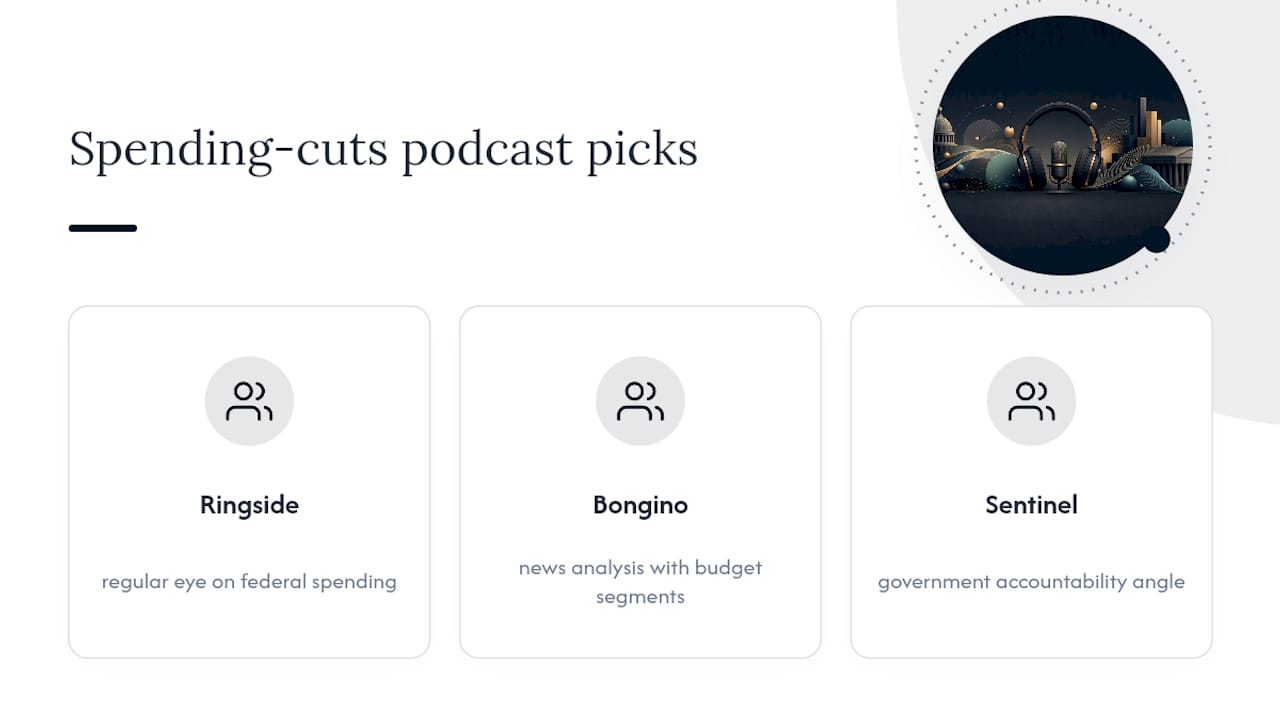
A few landing pages worth bookmarking if spending cuts and fiscal accountability are your focus: Ringside Politics covers political commentary with a regular eye on federal spending fights, The Dan Bongino Show mixes news analysis with budget and policy segments, and The Sentinel Report offers another angle on government accountability coverage. Browse the broader federalism podcasts category if you want more state-versus-federal framing alongside the national shows.
Pick one show page, check its latest episode notes for linked sources, and subscribe. That’s the whole first step.
Why Podcasts Cut Through the Budget Noise
Congressional appropriations language is dense on purpose, and cable news rarely has the runtime to walk through it line by line. A 40-minute podcast does. That’s the real value here: not another hot take, but a host willing to sit with a markup document until it makes sense.
Finding hosts who discuss detailed fiscal policy shouldn’t require multiple different apps. Subscribing to a show, following its notes, and reviewing the actual paperwork in front of you helps understand spending debates better.
— GOPcast