
If you want curated conservative, pro–free market podcasts without hunting across five different apps, use Gopcast as your one-stop hub. Focus your listening on three formats: daily news monologues, policy deep dives, and personality-led commentary
That’s the whole strategy in one sentence. The reason it works is simple math: conservative podcasts fall into these three formats because they serve three different needs, and most listeners only have room in their day for one or two.
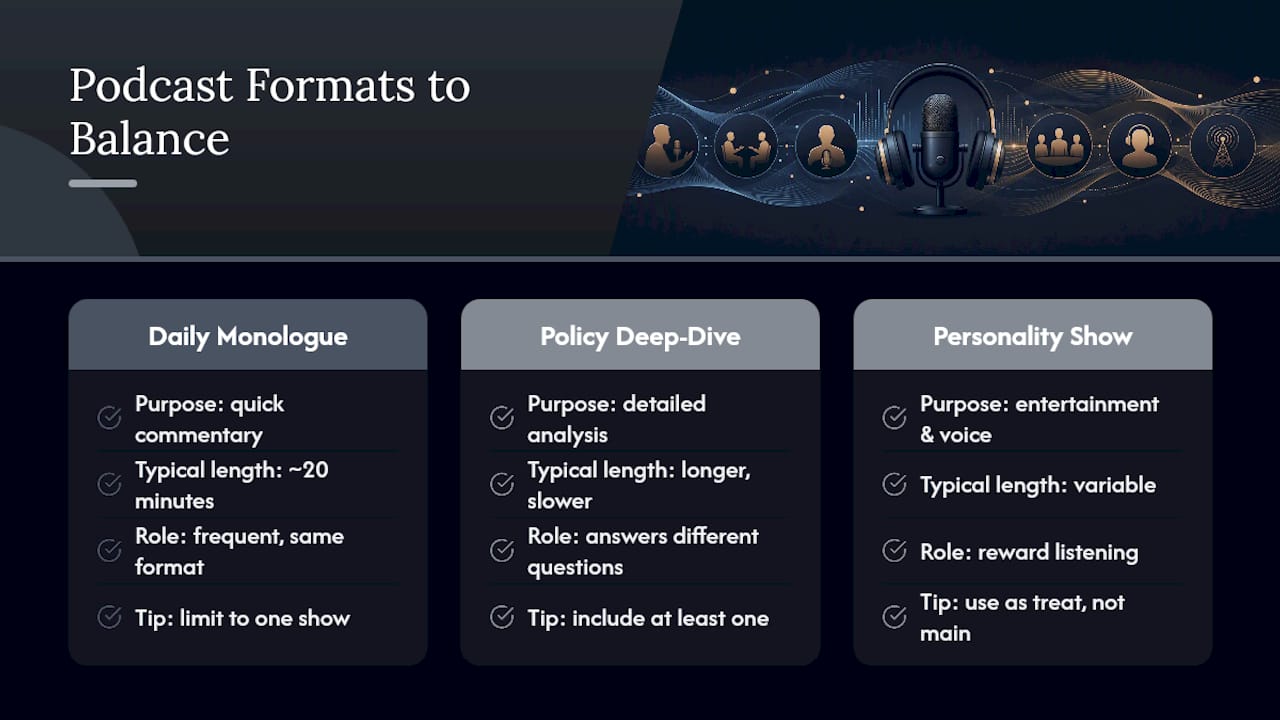
- Daily monologue — fast, opinion-forward, built for a commute
- Policy deep dive — long-form interviews and legal analysis for people who want the “why,” not just the “what”
- Personality/culture commentary — humor and banter that still holds a conservative line
Pro Tip: Pick one show from each format and give them a week. You’ll know within three episodes which style actually fits your schedule and your patience for partisanship.
Key Takeaways
Matching a conservative podcast to your listening style comes down to picking one show per format and building a small, repeatable daily playlist around them.
| Point | Details |
|---|---|
| Pick a format first | Choose daily monologue, policy deep dive, or personality commentary based on how you actually listen, not what’s trending. |
| Run the three-question check | Confirm pacing, frequency, and sourcing credibility before subscribing to any new show. |
| Build a three-slot playlist | Pair a morning monologue, a midday deep dive, and an evening culture show for full daily coverage. |
| Turn on notifications | Enable auto-download or push alerts for daily shows since political commentary loses value once it’s stale. |
| Use Gopcast as your hub | Gopcast centralizes flagship conservative shows like The Dan Bongino Show in one place, cutting discovery time to almost nothing. |
Table of Contents
- Where do I find free market podcasts worth subscribing to?
- How do I choose the right conservative podcast for my listening style?
- What’s the best way to actually keep up with these shows daily?
- Why Gopcast Is the Recommended Hub for Free Market Podcasts
- The Format Trap Most Listeners Fall Into
- Listen to Conservative Podcasts in One Place with Gopcast
- Frequently Asked Questions
- Sources
Where do I find free market podcasts worth subscribing to?
The honest answer is you probably won’t find them by scrolling a generic podcast app’s charts. Those charts mix everything together, and conservative talk gets buried under true crime and celebrity interviews. A curated hub solves that problem by sorting shows into formats before you ever hit play.
Here’s how the three core formats break down, with examples of what to expect from each.
1. Daily news monologues
These are built for speed. A host opens with the day’s biggest story, breaks it down for 15 to 45 minutes, and moves on. No long guest segments, no rabbit holes. Programs structured this way, like The Ben Shapiro Show, post frequent, opinion-forward episodes designed to be consumed in one sitting during a drive or a workout.
Who it’s for: commuters, people who want a news briefing with an edge, anyone who checks headlines obsessively and wants a single voice to cut through the noise once a day.
Try this: queue up The Dan Bongino Show or Hang Out with Sean Hannity on Gopcast and listen to whatever dropped that morning. You’ll know within ten minutes if the pacing works for you.
2. Policy deep dives
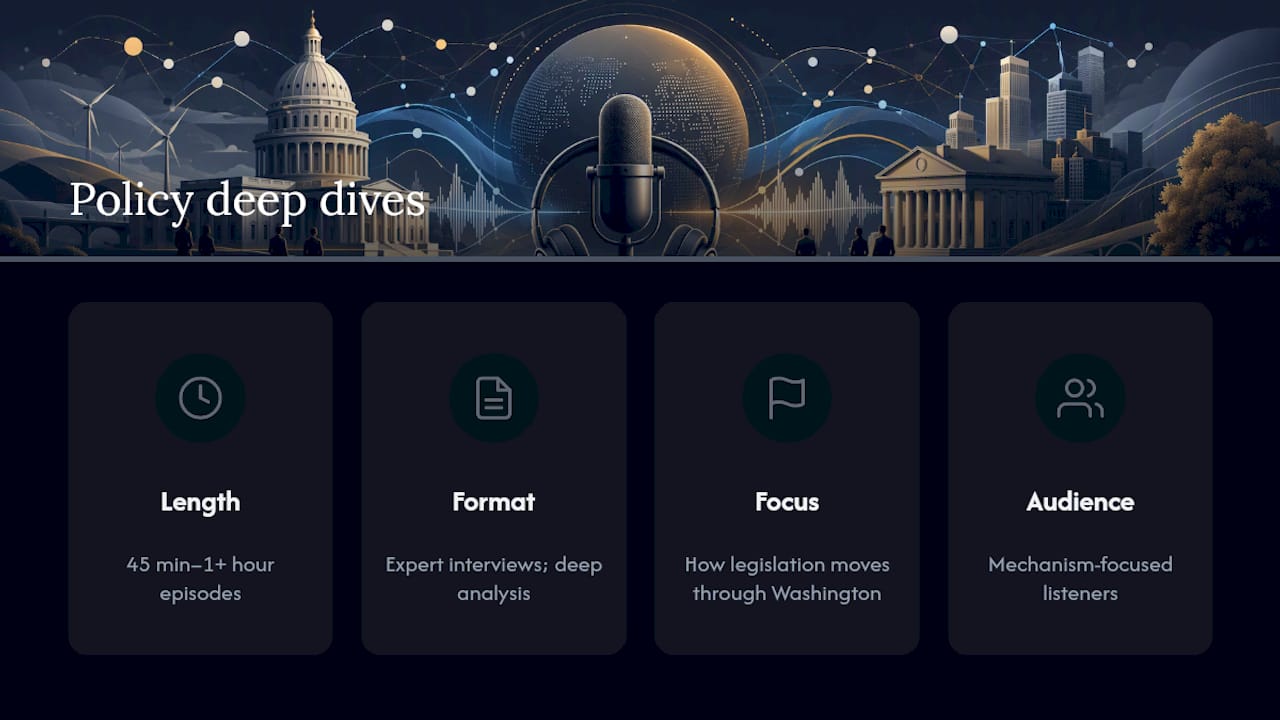
This format trades speed for depth. Episodes run longer, often 45 minutes to over an hour, and center on interviews with policymakers, attorneys, or subject-matter experts. Daily Signal programming built around this style leans heavily on analyzing how legislation and regulation actually move through Washington rather than just reacting to headlines. Signal Sitdown takes that even further, explicitly framing itself as pulling back the curtain on how policy gets made from a conservative vantage point.
Who it’s for: listeners who want to understand mechanisms, not just outcomes. If you find yourself asking “but how did that bill actually pass,” this is your format.
Try this: pull up The Trey Gowdy Podcast and sample a full interview segment rather than skipping ahead. The value here is in the sourcing and the guest, not the pacing.
3. Personality and culture commentary
This format is looser by design. Hosts lean on humor, running bits, and a strong personal voice to cover the same political ground as the other two formats, just with more banter and less formality. Shows built around personality-driven delivery often broaden their audience precisely because they don’t feel like a lecture, even when the underlying politics are just as firm.
Who it’s for: listeners who want conservative commentary but find straight monologue shows a little dry, or who listen socially, with a spouse or during downtime rather than heads-down commuting.
Try this: sample Louder with Crowder for a full episode. Then jump into a 30-minute interview segment from a policy deep dive the same week. That contrast alone will tell you where your preference actually sits.
How do I choose the right conservative podcast for my listening style?
Matching a show to your habits comes down to three checks, run before you commit to a subscription.
Tone and host background. Some hosts are combative by design; others lean scholarly, and some run almost entirely on comic timing. None of these are more “correct” than another, but they wear differently over a month of daily listening. Host tone tends to dictate the format and the community feel far more than the specific policy topic being discussed that day, so pick tone first.
Frequency and length. A daily 20-minute show and a weekly 90-minute interview solve different problems. Daily shows keep you current; weekly long-form shows go deeper but leave gaps between drops. Know which gap you’re trying to fill before you subscribe.
Credibility cues. Look for consistent sourcing, named guests with actual policy or legal credentials, and a host who cites where a claim comes from rather than asserting it flatly.
Before subscribing to anything, run these three questions:
- Does the pacing match when and how I actually listen (commute, gym, downtime)?
- Am I looking for a daily habit or a weekly deep dive?
- Does the host back claims with named sources, or just repeat talking points?
Pro Tip: Treat every one of these shows as commentary, not neutral reporting. That’s not a knock. It’s the format. Knowing that up front keeps you from being surprised by the framing later.
What’s the best way to actually keep up with these shows daily?
Building a workflow matters more than picking the “perfect” show. Even a great podcast is useless if it sits unplayed in a feed you forget to check.
- Start with Gopcast as your hub, then pin your top two or three favorites directly in the platform or your podcast app for one-tap access.
- Turn on push notifications or auto-download for your daily monologue show specifically. Political commentary loses value fast when it’s stale, so real-time uploads matter more here than in almost any other genre.
- Build a three-slot playlist: a daily monologue for the morning commute, a policy deep dive for lunch or a longer drive, and a personality/culture show for the evening wind-down.
- Revisit the mix monthly. The most effective listening routines mix a daily aggregator for fast updates with a couple of saved favorites for the long-form episodes, rather than trying to keep up with a dozen shows at once.
That fourth habit is the one people skip, and it’s the one that keeps a podcast lineup from going stale after a few months.
Why Gopcast Is the Recommended Hub for Free Market Podcasts
Gopcast exists to solve one specific problem: conservative talk radio and podcasting is enormous, and most of it isn’t organized in any useful way. Broad roundups of conservative shows prove there’s no shortage of options, but a long alphabetical list isn’t the same as a curated path to the three shows that actually fit your habits.
Gopcast aggregates prominent conservative programs, including Bannon’s War Room and The Dan Bongino Show, and sorts them so you spend less time browsing and more time listening.
- Centralized access to flagship conservative shows in one platform, no app-hopping required
- Category browsing across news, commentary, interviews, and investigative content
- A consistent editorial line, so you’re not guessing which shows lean where
- Direct show pages that make subscribing a one-click action
Start at the Gopcast homepage to browse categories, or jump straight into a flagship show like The Dan Bongino Show or The Trey Gowdy Podcast to see the format in action.
The Format Trap Most Listeners Fall Into
Most advice on this topic treats every conservative show as interchangeable, as if picking one is just a matter of taste. It isn’t. The real mistake listeners make is subscribing to multiple daily monologue shows and calling it a balanced media diet. That’s not balance. That’s the same format five times, just with different voices saying similar things in a similar order.
The format matters more than the host. A daily monologue and a policy deep dive aren’t competing for the same 20 minutes of your day; they’re answering different questions. Skipping the deep-dive format entirely because it feels slower is the single biggest gap in how people build their lineup, and it’s the one this guide pushes back on hardest.
Start with one show per format. Let the personality shows be your reward listening, not your only listening. That’s the mix that actually holds up over months instead of fading out after three weeks.
Listen to Conservative Podcasts in One Place with Gopcast
Gopcast is built for exactly the problem this article just walked through: too many good shows, scattered across too many apps, with no easy way to sort them by format. Instead of bouncing between a podcast app, a news app, and a browser tab for show notes, Gopcast puts flagship conservative programming, from daily monologues to policy interviews, on one platform with consistent categories.

That matters most for listeners trying to build the three-slot routine described above. You can pin a daily show, a deep dive, and a culture commentary program without juggling separate subscriptions across separate services. If you’re ready to build that lineup, start on the Gopcast homepage, or jump straight into a flagship pick like the Brian Kilmeade Show to see how quickly you can go from browsing to listening.
Frequently Asked Questions
What are free market podcasts in this context?
They’re conservative political talk shows and commentary programs, hosted or aggregated by platforms like Gopcast, that generally align with pro-free-market and right-leaning perspectives on news and policy.
How many conservative podcasts should I actually subscribe to?
Three is a practical starting point: one daily monologue, one policy deep dive, and one personality-driven commentary show. Adding more than that tends to create backlog rather than better information.
Are these shows a substitute for straight news reporting?
No. Host tone and personal perspective shape these shows far more than neutral reporting does, so treat them as informed commentary and opinion, not wire-service journalism.
Can I listen to these shows without downloading a separate app for each one?
Yes. Gopcast centralizes access to flagship shows in one platform, which removes the need to manage separate subscriptions across multiple podcast apps.
How often do daily monologue shows actually publish new episodes?
Most run five days a week, tied to the news cycle, which is why enabling notifications or auto-download matters more for this format than for weekly deep dives.
Sources
- The Dana Show with Dana Loesch — Rephonic
- The Tony Kinnett Cast - The Daily Signal
- 100 Best Conservative Podcasts to Listen to in 2026 — Feedspot