
Right-wing political talk shows now live mostly in podcast feeds and video streams, not only on AM radio. The best way to start is to pick a format (daily news-driven, long interview, or weekly deep dive), sample two or three hosts, and keep the ones whose sourcing and tone you trust. GOPcast gathers conservative shows in one place so you can compare them without hopping between apps.
TL;DR
- Conservative talk has moved from radio dials to podcast apps and video platforms, and audiences for the biggest right-leaning shows have grown sharply since late 2024.
- Shows differ by format: live daily commentary, long-form interviews, and topic-focused programs on health, energy, books or film.
- Choose by schedule, tone and how the host handles sources, not by name recognition alone.
- Online political commentary is host-driven and not bound by broadcast impartiality rules, so listen with a critical ear whatever your politics.
- You can browse and stream conservative shows from one portal with GOPcast, with no payment required to listen.
Table of Contents
- What counts as a right-wing political talk show
- Why the audience keeps growing
- The main formats, and who each one suits
- How video changed the way people listen
- How to choose a show you will keep
- Listening with a critical ear
- The conservative podcasting scene is competitive
- Perspective: why a single hub matters
- Start listening with GOPcast
- Frequently asked questions
- Sources
What counts as a right-wing political talk show
A right-wing political talk show is a recurring program where a host, often with guests and callers, discusses news and politics from a conservative or right-leaning point of view. That covers a wide range. Some hosts are former radio personalities, some are lawyers or former law enforcement officers, some are activists, and some are independent creators who built an audience online.
The label “talk show” now stretches across three delivery channels:
- Broadcast and satellite radio, the traditional home of the genre, with fixed daytime slots and call-in segments.
- Podcasts, on demand and usually released daily or weekly, in audio and increasingly in video.
- Live streams and video channels, where the show airs live, then lives on as a clip library.
The lines between these blur. A show that airs live in the morning is often a podcast feed by afternoon and a set of short clips by evening. If you want a deeper look at the radio side of the genre, our guide to conservative radio talk show hosts covers it.
Why the audience keeps growing
The numbers point in one direction. A comparison of Edison Podcast Metrics data reported by SSRS found that several prominent right-leaning podcasts grew their weekly U.S. audiences between Q4 2024 and Q2 2026, with the biggest gains above 100% for two shows and smaller double-digit or single-digit gains for others. NPR, citing the same type of data, reported in April 2026 that the most popular right-wing podcasts reached average weekly audiences above 1.6 million, enough to place them among the top 20 podcasts in the country.
Two reasons stand out.
Trust in the format. A March 2026 Signal Hill/Voxtopica poll, reported by Triton Digital, found that a majority of podcast listeners trust information in podcasts more than other media formats. The same poll found weekly podcast listening is higher among registered voters (49%) than among the general population (37%). People who follow politics closely are simply more likely to be listening.
Frustration with the mainstream. Many of our listeners come to talk shows because they feel national news outlets do not reflect their views. We explore that pull in more detail in why conservative podcasts are so popular.

The main formats, and who each one suits
Knowing the format saves you hours. Here is how the common types compare.
| Format | Typical length | Rhythm | Best for |
|---|---|---|---|
| Live daily commentary | 1 to 3 hours | Weekdays, often live | Following breaking political news as it unfolds |
| Host-led monologue plus guests | 45 to 90 minutes | Daily or several times a week | A single consistent voice and routine |
| Long-form interview | 1 to 3 hours | Weekly | Understanding a guest’s full argument |
| Topic-focused show | 30 to 60 minutes | Weekly | Health, energy, books, film, or other niches |
Length varies by show, so treat the table as a general guide and check the episode list before you commit.
Live daily commentary
These shows treat politics as a news cycle. Bannon’s War Room is the best known example on our platform: a daily, fast-moving program built around current events, interviews and activism. If you want to be in the conversation the same day it happens, this is the format.
Host-led daily shows
The Dan Bongino Show is a good example of a host-centered program, where one voice sets the agenda, reacts to the news and explains why it matters. These suit commuters and anyone who likes a regular companion rather than a panel.
Topic-focused programs
Not every conservative listener wants only election politics. Some want policy depth on one subject. We have separate guides for conservative health policy podcasts, conservative energy podcasts, conservative book podcasts and conservative movie podcasts.
How video changed the way people listen
Many political shows are now watched as much as heard. Triton Digital’s March 2026 analysis notes that video is a catalyst for podcasting’s mass appeal and that YouTube has eclipsed Apple and Spotify as a podcast provider, as people watch in their living rooms.
For listeners, that means a single show can show up in several places: an audio feed, a full video episode and short clips. For creators, it means every platform has its own format rules. A social video specs checker helps anyone cutting clips from a long show to confirm each platform’s requirements before posting.
Platform access is also not guaranteed. Some independent conservative networks have had channels terminated on major platforms and have had to pivot to alternatives. The John Fredericks Radio Network, for example, describes the financial and engagement toll of losing its channels and the move to other services. If a favorite show lives on only one platform, its audience can vanish overnight. That is one practical reason to keep a single hub that points you to the shows wherever they stream.
How to choose a show you will keep
Popularity tells you what others are hearing. It does not tell you what suits you. Use these criteria.
- Schedule. Do you want something daily, or a weekly show you can savor? A daily live program can pile up fast if you fall behind.
- Host style. Some hosts are combative, some are conversational, some are wonky. Listen to one full episode, not a clip.
- Guests. A show that books a range of guests will give you more than one angle on a story. A show that books only allies will give you one.
- Sourcing. Does the host name where a claim comes from, such as a document, a court filing, a data release or a named witness? Shows that point you to the original material make it easy to check.
- Topic fit. If you care mainly about health, energy, or culture, a topic-focused show will serve you better than a general political one.
- Where it streams. Check that the show is available somewhere you already listen.
A simple three-show trial
Pick one live daily show, one interview show and one topic show. Give each a week. At the end, keep the one you looked forward to and drop the one you skipped. Most listeners settle into two or three shows they truly follow.

Listening with a critical ear
Good talk shows are opinionated by design. Researchers at the Reuters Institute who mapped news creators found that online political commentary is often creator-led and not constrained by broadcast impartiality norms, and that in the United States most political commentary creators identify on the right. That freedom is what makes the shows candid and lively. It also means the host’s framing carries more weight than it would in a newsroom.
The same research found that concern about telling truth from falsehood online is highest in the United States, at 73%. That concern cuts across party lines. A few habits help whatever you listen to:
- Note which parts of an episode are reporting, which are analysis and which are opinion.
- When a surprising claim lands, look for the primary document or the original recording.
- Compare how two hosts cover the same event. The differences teach you more than either one alone.
The Reuters Institute’s Digital News Report 2025 adds context: overall trust in news was 40%, stable for the third year, and online influencers and national politicians were each named by 47% of respondents as the biggest threats for false or misleading information. Skepticism is a skill worth building, and it makes you a better listener.
The conservative podcasting scene is competitive
The top of the market is crowded, and hosts sometimes disagree with each other in public. Triton Digital describes the conservative podcasting world in 2026 as marked by intense competition and occasional public feuding among top hosts. For listeners, that is a feature: a movement with several strong voices that argue is more interesting than one with a single script. Following more than one show lets you see where the right agrees and where it does not.
If you want a ranked starting point, see our list of top conservative political podcasts, or browse the full conservative podcast directory. For a curated set to sample, try 7 conservative shows to try.
Perspective: why a single hub matters
Finding reliable conservative voices is harder than it should be. Shows are scattered across radio streams, podcast apps and video channels, and a channel that disappears from one platform can leave listeners guessing where a show went.
We built GOPcast to solve that. Our approach is to bring prominent political shows into one place and organize them by category, so a listener can move from news to commentary to interviews, activism, health, comedy or investigative content without starting a new search each time.
We believe listeners deserve to choose for themselves. That is why we curate rather than dictate: you see the hosts, you pick the ones that match your values, and you build your own lineup. A shared home for these programs also gives like-minded listeners a sense of community that scattered feeds cannot.
GOPcast
Start listening with GOPcast
GOPcast brings conservative political podcasts together in a single portal. You can stream live and recorded shows on the web, browse by category, and find programs like Bannon’s War Room and The Dan Bongino Show without hunting through several apps. Listening is free.
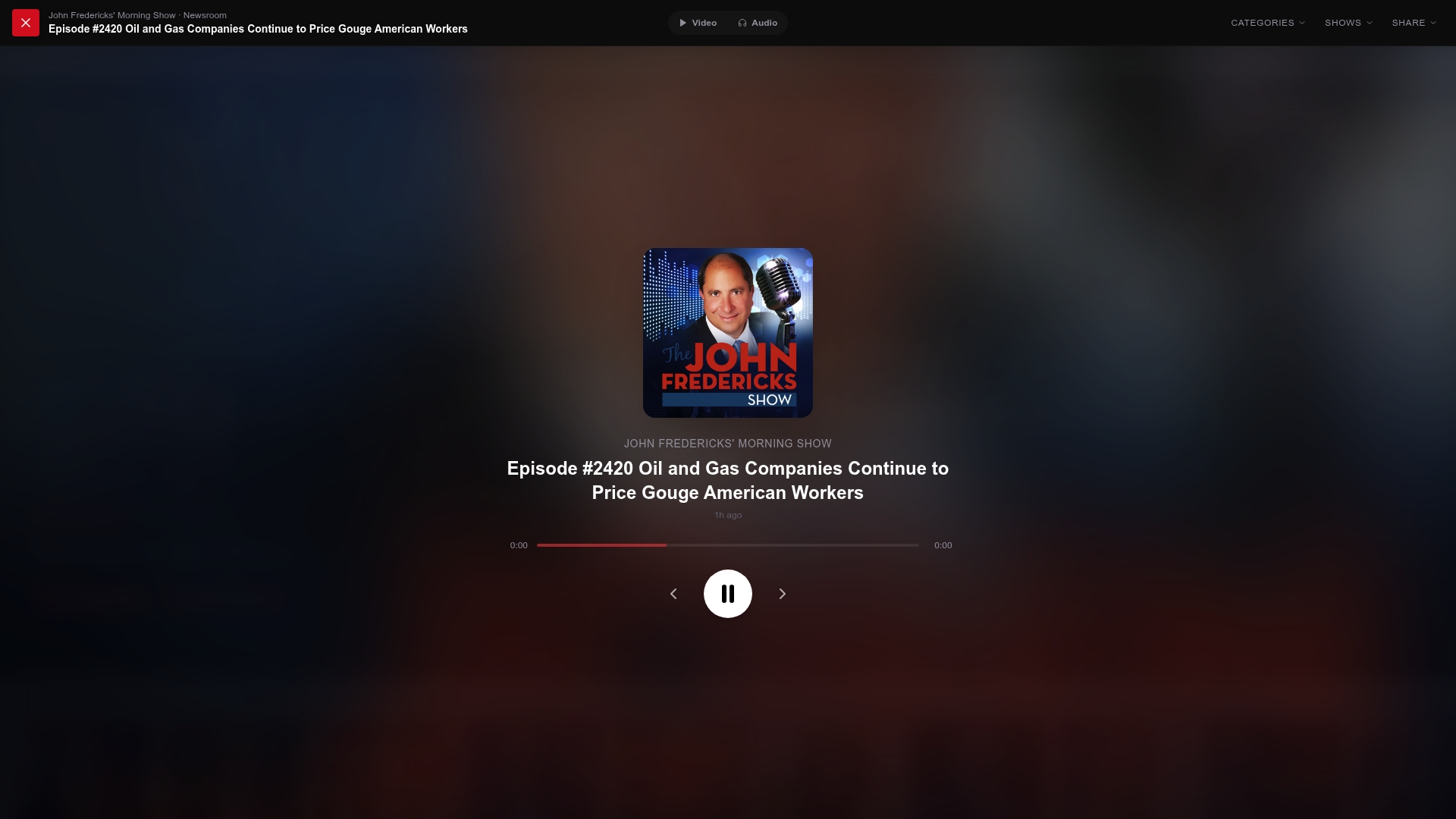
If you want a first show to try, start with The Mel K Show, free to listen on GOPcast. Then explore the rest of the lineup at GOPcast.com and watch with GOPcast whenever a show offers video.
Frequently asked questions
What are the most popular right-wing talk shows?
Audience data changes quarterly, so the ranking shifts. Edison-based figures reported by SSRS show that several top conservative podcasts added audience between Q4 2024 and Q2 2026. For a current view on our platform, browse our top conservative political podcasts.
What is the difference between conservative talk radio and conservative podcasts?
Radio follows a fixed broadcast schedule and usually airs live with callers. Podcasts are on demand, often released as audio and video, and you can listen at any hour. Many shows now do both, airing live and then posting the episode as a podcast.
Where can I find conservative talk shows in one place?
GOPcast aggregates prominent conservative political shows into a single web portal, organized by category such as news, commentary, interviews, activism, health, comedy and investigative content. You can stream without paying.
How do I know if a talk show is reliable?
Look for hosts who name their sources, correct mistakes and book a range of guests. Check original documents when a claim surprises you. Survey research shows that concern about separating truth from falsehood online is highest in the United States at 73%, so checking is a good habit for any listener.
Sources
- Right Wing Podcast Power Shift, SSRS
- In criticism of the war in Iran, some conservatives focus their ire on Trump himself, NPR
- Do warring podcasters pose a problem for the political right and for each other, Triton Digital
- Mapping news creators and influencers in social and video networks, Reuters Institute
- Digital News Report 2025 overview and key findings, Reuters Institute
- The John Fredericks Radio Network
- Social Media Video Validator, Postferry