
Conservative book podcasts are a small, scattered corner of audio. Dedicated shows that review a title per episode exist, but most book talk on the right happens inside interview shows, commentary programs and faith or culture broadcasts, where an author drops in for twenty minutes and the host reads a passage aloud. Finding the good stuff means knowing where to look and how to judge what you hear. This guide covers both, and it shows how to turn a pile of political audio into a reading list you will actually finish.
We built GOPcast to put prominent conservative programs in one place, so we spend a lot of time thinking about how listeners discover shows. Here is what we have learned about books in particular.
TL;DR
- Few conservative podcasts are purely about books. Most book discussion lives inside interview, commentary and culture shows, so search by guest and topic, not only by show name.
- Check three things before you commit to a show: how often it features authors, whether the host has read the book, and whether it ever pushes back on a guest.
- Pair listening with reading. Pick one title, hear two or three conversations about it, then read it and compare.
- GOPcast brings conservative shows together for free listening, with browsing by category such as news, commentary, interviews, activism and investigative content.
Table of Contents
- What counts as a conservative book podcast
- The three kinds of shows where books come up
- A worked example: one book, three ways to hear about it
- Finding book talk on GOPcast
- How to judge a show’s treatment of books
- Turn your listening into a reading routine
- Where adjacent topics fit
- Our perspective
- Start listening with GOPcast
- FAQ
- Sources
What counts as a conservative book podcast
The phrase covers more than it seems to. A strict definition would be a show whose main format is discussing books, from a conservative point of view. That is a narrow list. A looser, more useful definition includes any program where books drive a meaningful share of the conversation: author interviews, host-recommended reading, or episodes that walk through a text chapter by chapter.
The looser definition matters because the political right has a long habit of arguing through books. Policy fights, historical disputes and cultural arguments often start with a title that a host or guest cannot stop mentioning. If you only look for shows with “book” in the name, you miss most of that.
A practical test: open the last ten episodes of any show and count how many have a book or an author in the title or description. Two or three out of ten means books are a regular ingredient. Zero means the show is news or commentary, which is fine, just a different purpose.

The three kinds of shows where books come up
Author-interview shows
These are the closest thing to a book podcast. The host invites an author, asks about the thesis, and lets the author make the case. The strength is access: you hear why the writer wrote the book, what they cut, and what they would say to critics. The weakness is that a friendly interview can slide into a long advertisement for the title. Listen for follow-up questions. A good host asks what the strongest objection is.
Commentary shows with a reading habit
Many talk hosts quote books on air, recommend them to the audience, or build a whole segment around a new release. Here the book is a means to an argument. You get the host’s reading of the text, which may be sharp and may be selective. Treat these episodes as a pointer, then check the book itself.
Culture, faith and history programs
Shows that cover faith, family, history or the arts tend to bring in books more naturally, because their subjects are older and deeper than the news cycle. Novels, theology, biography and political philosophy appear here more often than on a daily news program. If you want to read beyond the week’s headlines, this is the category to sample first.
On GOPcast, the catalog is organized around news, commentary, interviews, activism, health, comedy and investigative content, so the interview and commentary categories are the best places to start hunting for author conversations.
A worked example: one book, three ways to hear about it
It helps to see how a single title travels through the audio world. Take Christopher J. Scalia’s 13 Novels Conservatives Will Love (but Probably Haven’t Read).
The American Enterprise Institute’s page for the book describes it as an examination of 13 works of anglophone literary fiction, connecting themes such as national identity, tradition, religion and human nature with conservative thinkers. That is the book’s pitch in one sentence, and it is exactly the kind of idea that suits a spoken conversation.
The Simon & Schuster listing gives the practical details: a Regnery publication dated July 8, 2025, 352 pages in the eBook edition, and links to retailers including Kindle, Apple Books, Barnes & Noble, Bookshop, Google Play and Kobo. It also notes that eBook prices can vary by retailer, so check before you buy.
A third angle comes from reporting. The Daily Signal’s write-up says the selection runs in chronological order and mixes famous names such as Nathaniel Hawthorne and George Eliot with lesser-known ones such as Leif Enger and Christopher Beha.
Now think about how you would use these pieces as a listener:
- Hear the author explain the idea in an interview, in his own words.
- Hear a host react to it, ideally one who has read at least part of it.
- Read the first novel on the list and see whether the argument holds up for you.
That three-step loop is the most reliable way to get value from book talk on any podcast. The conversation is the doorway. The book is the room.
Finding book talk on GOPcast
We do not pretend the shows on our platform are book clubs. They are conservative news, commentary and interview programs. But books surface in them the way they do in any serious talk format, and our browsing makes it easy to scan for them.
Here is how we suggest starting:
- Begin at the front door. On GOPcast.com you can browse by category and open any show’s page to see what it covers.
- Use the interview category first. Episodes built around a single guest are where authors most often appear.
- Read episode descriptions. Hosts usually name a guest’s book in the summary. Skim for titles, not only topics.
- Map the landscape. Our conservative podcast directory and our list of top conservative political podcasts show what is available so you can pick two or three shows to sample rather than twenty.
If you like your books on the faith and culture side, a show such as The Road Forward with Tim Clinton or Firewall with Lance Wallnau is a reasonable place to look for conversations that reach beyond the day’s headlines. If you lean toward investigative and political commentary, The Mel K Show is worth a sample. Open a few recent episodes and judge for yourself whether the guest list fits your reading taste.
For listeners who want a wider on-ramp into the format, our piece on why conservative podcasts are so popular explains what draws audiences to long-form conversation in the first place.
How to judge a show’s treatment of books
Not all book conversations are equal. A host who has read the book and a host who has read the press release sound different within three minutes. Use these checks.
Does the host know the text?
Listen for specifics: a chapter, a quotation, a page of an argument that surprised the host. Vague praise (“a must-read”) with no detail is a warning sign. The best hosts disagree with a passage out loud and explain why.
Is there pushback?
An interview where every question is a setup is a promotion. Look for at least one moment where the host presses, asks for evidence or names a counterargument. That is where you learn whether the thesis can stand up.
Who benefits?
Some episodes are tied to a release schedule, a publisher or a sponsor. That does not make them useless, but it should change how much weight you give a glowing review. Ask whether the host would say the same thing if there were no book to sell.
What is the book’s own standing?
Before you read something a podcast recommends, check the publisher’s page, a library catalog or an independent review. Titles such as Scalia’s, which sit on publisher and think-tank pages with clear bibliographic details, are easy to verify. A recommendation that you cannot trace to a real edition is not worth your time.
Is the viewpoint labeled?
It is fine, even good, for a conservative show to be openly conservative. What you want is honesty about it. If you are hoping for balanced coverage, remember that these programs offer a point of view, and a thoughtful listener supplements them with other sources, including books by writers who disagree.
Our own take on this is simple: a podcast is an argument in audio form. Judge it the way you would judge an argument on the page.
Turn your listening into a reading routine
The common failure is collecting recommendations and reading none. A small system fixes that.
- Keep one running list. Every time a guest’s book sounds interesting, write down the title and author, nothing more.
- Pick one title a month. A monthly cadence is realistic for most people with jobs and families. Choose the one you are most curious about, not the one you think you should read.
- Check the edition. Confirm the format (print, eBook, audiobook) and length. A 352-page book is a different commitment from a 120-page one, and prices vary by retailer.
- Listen before and after. Hear one or two conversations before you start, then another when you finish. Notice what changed in your view.
- Try fiction. Political readers often stick to nonfiction. A list of novels, like the one above, offers a way into the same ideas through story, which many people find easier to retain.
- Share it. Mention the book to a friend or in a family conversation. Arguments clarify when you say them aloud.
A library card makes this nearly free. Most public libraries lend print, eBook and audiobook copies, and you can place holds on new releases.
Where adjacent topics fit
Book conversation rarely stays in one lane. A guest who wrote about medicine drifts into policy, and one who wrote about technology ends up on speech and privacy. If your reading interests run that way, our guides to conservative health policy podcasts, conservative privacy podcasts and big tech censorship podcasts point to shows where authors in those fields tend to appear. And if you prefer the radio tradition, see our overview of conservative radio talk show hosts.
Our perspective
We run a platform for conservative audio, and we think the book question says something about the whole format. Listeners come to conservative podcasts because they want voices they trust talking at length, without the clock of a cable segment. Books are the natural companion to that appetite. A long conversation tells you what someone thinks. A book shows you how they got there.
We also believe a curated hub does its best work when it is honest about its limits. Our catalog centers on news, commentary, interviews and activism, and we would rather tell you that plainly than claim a library of book shows we do not have. What we can do is gather prominent conservative programs in one place, let you browse by category, and make it quick to sample a show before you commit. The reading, the weighing and the disagreeing remain yours, and that is how it should be.
— GOPcast
Start listening with GOPcast
If you want to hear how conservative hosts and guests handle big ideas, you can watch with GOPcast and sample shows across categories without paying. Our platform streams live and recorded programs from right-leaning hosts on the web, so you can move from a news show to a long interview in a few clicks.
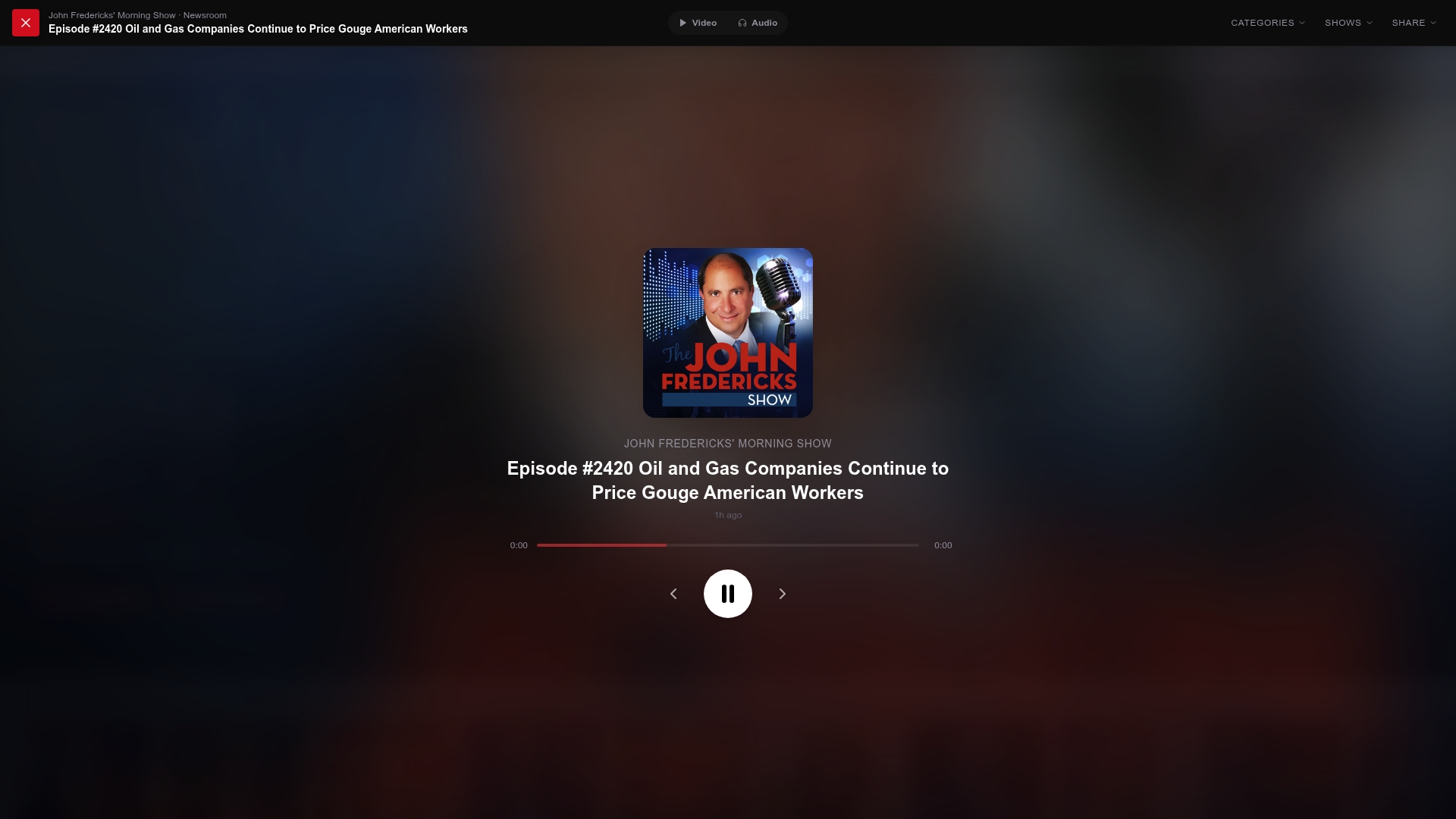
A good first step is to try an interview-heavy program such as Coming Home or RAV Breaking Point, then browse the rest of the lineup at GOPcast.com. Note any author who makes you want to read, and take it from there.
FAQ
Are there podcasts that only cover conservative books?
There are a few, but they are rare compared with news and commentary shows. Most book discussion on the right happens inside interview and culture programs. The more productive approach is to browse by category and scan episode descriptions for author names and titles.
What novels do conservatives recommend?
One recent example is Christopher J. Scalia’s 13 Novels Conservatives Will Love (but Probably Haven’t Read), which examines 13 works of anglophone literary fiction, according to the American Enterprise Institute. Coverage of the book says the list is chronological and includes Hawthorne and George Eliot. Use it as a starting point, then follow your own taste.
How can I tell whether a podcast is about books or just politics?
Count the episodes. Open the last ten and see how many are built around an author or a title. If books appear in a few of them and the host discusses them in detail, the show treats books seriously. If none do, it is a news or commentary program.
Are conservative book podcasts unbiased?
No, and they do not claim to be. They present a conservative point of view, which is useful if that is what you want. For a fuller picture, read books by authors who disagree and check a title’s publisher page or library listing before you take a host’s word for it.
Can I listen to these shows for free?
On GOPcast, the shows we list are free to listen to on the web. Pick a category, open a show page and press play. Availability of individual episodes can change, so check each show’s page for what is currently posted.
Sources
- 13 Novels Conservatives Will Love (but Probably Haven’t Read), American Enterprise Institute
- 13 Novels Conservatives Will Love (but Probably Haven’t Read), Simon & Schuster
- 13 Great but Obscure Novels Conservatives Should Read, The Daily Signal