
The fastest way to follow conservative news podcasts is to use a curated hub like Gopcast and start with a short shortlist of daily briefs, longform interviews, and opinion shows. Gopcast aggregates the top right-wing programs into one streaming portal, so you skip the app-hopping and get straight to listening.
That alignment is exactly why conservative listeners are migrating to podcasts. Edison Research found podcasts now account for 40% of spoken-word listening time versus 39% for radio, a structural shift that makes a curated hub more useful than ever.
Key Takeaways
Conservative podcast listeners now have more high-quality right-leaning audio and video content than ever, and Gopcast is the most direct path to accessing it without managing multiple apps or subscriptions.
| Point | Details |
|---|---|
| Podcasts lead spoken-word listening | Edison Research puts podcasts at 40% of spoken-word time, ahead of talk radio at 39%. |
| Conservative listeners trust podcasts more | Republican listeners are more likely than Democratic listeners to trust podcast news over other sources. |
| Alignment drives loyalty | 47% of listeners who hear political opinions say those views mostly match their own. |
| Start with format, then host | Match episode length and frequency to your schedule before committing to any show. |
| Gopcast as your hub | Gopcast aggregates top conservative shows in one free web portal, organized by category. |
Table of Contents
- Which conservative podcasts should you start with?
- Why podcasts have overtaken talk radio for conservative listeners
- How do you pick the right conservative podcast for your needs?
- How to start listening: apps, web, audio, and video
- Building a listening routine that doesn’t burn you out
- What does it cost to listen to conservative podcasts?
- Gopcast puts every conservative podcast in one place
- The case for a curated hub over scattered subscriptions
- Sources
Which conservative podcasts should you start with?
The shows below are grouped by what you actually want from a listening session. Each one is available on Gopcast’s web player, with audio and video options noted.
Daily news brief
- Brian Kilmeade Show — Fox News Radio veteran covers breaking political news in tight segments; audio-only, daily, 30–60 minutes. Perfect for a commute.
- National Update — Concise headline-driven format for listeners who want the day’s top stories without extended commentary; audio, daily.
- Benny Johnson Show — Short-form political takes with a social-media native sensibility; video-enabled, frequent uploads.
Longform interview / deep dive
- The Dan Bongino Show — Former Secret Service agent and NYPD officer; daily, 60+ minutes, audio and video, heavy on sourced analysis and investigative framing.
- Lou Dobbs — Veteran financial and political broadcaster; archived episodes available; audio and video.
Opinion / commentary
- Louder with Crowder — Steven Crowder’s video-first show blends political commentary with comedy; video-enabled, weekly longform.
- Perino on Politics — Former White House Press Secretary Dana Perino; measured, policy-focused analysis; audio, weekly.
- Diamond and Silk — High-energy duo known for blunt cultural commentary; video-enabled, frequent.
Live / talk show
- Bannon’s War Room — Steve Bannon’s daily live program; fast-paced, activist framing, video and audio on Gopcast.
- The Sentinel Report — Investigative-leaning talk format; audio and video.
- Stinchfield Tonight — Evening news-talk hybrid with a direct, no-filter style; video-enabled.
Why podcasts have overtaken talk radio for conservative listeners
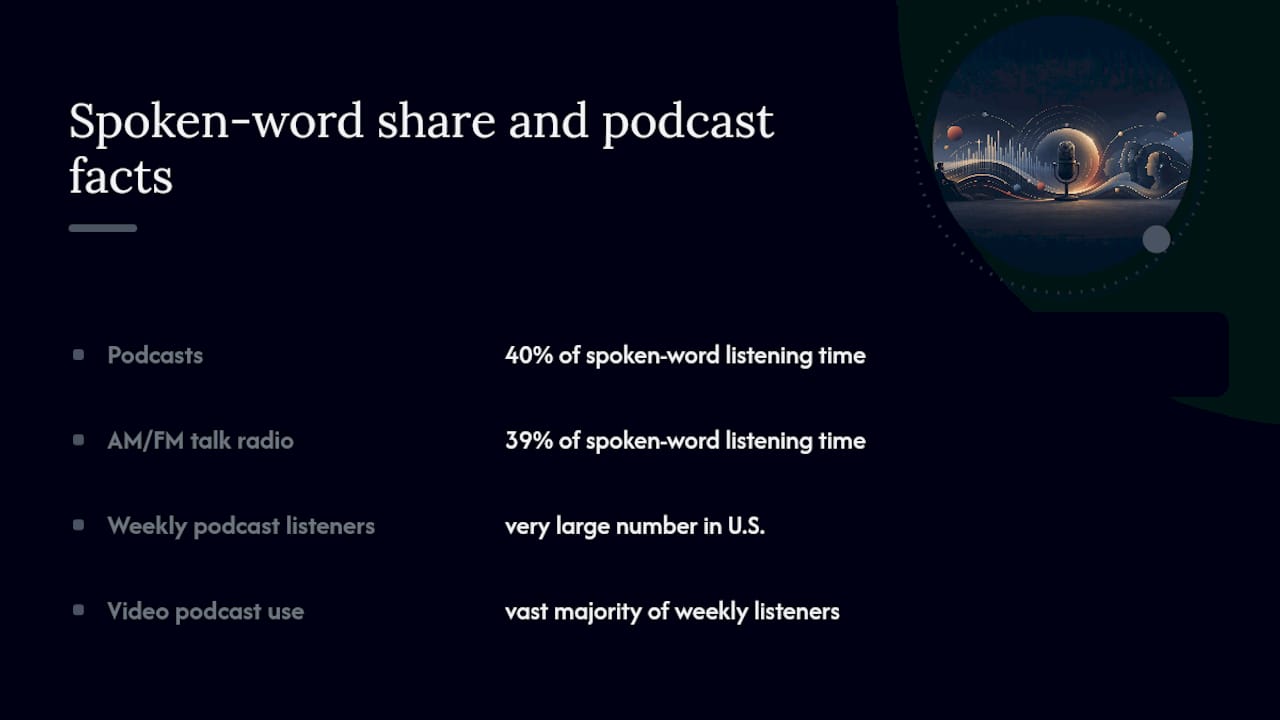
The numbers tell a clean story. Edison Research’s Share of Ear data shows podcasts at 40% of spoken-word listening time, edging past AM/FM talk radio at 39%, with a very large number of weekly podcast listeners in the U.S. That same study found a vast majority of weekly listeners consume podcasts with a video component.
For conservative audiences specifically, the pull is even stronger. Republican listeners are more likely than Democratic listeners to trust podcast news over other sources and to report hearing content they wouldn’t find elsewhere. Industry analysis from Signal Hill and Triton Digital confirms the news podcast audience has shifted toward more Republican listeners, and those listeners report listening to “get a point of view I wouldn’t hear on other media” at rates well above the average podcast listener.
Part of that loyalty is structural. Academic research on longform conversational podcasts documents what researchers call the “chumcast” intimacy effect: the format creates a sense of private conversation that builds repeat engagement and host trust in a way broadcast radio rarely achieves. When a host speaks directly into your earbuds for an hour, the relationship feels personal.
Pro Tip: Use audio for commutes and workouts where your eyes are occupied. Switch to video for longform interviews at home — you catch body language and on-screen graphics that add context.
How do you pick the right conservative podcast for your needs?
Start with format and frequency before you commit. A daily 90-minute show sounds great until week two, when the backlog becomes a chore.
Selection checklist
- Best for: Does the show specialize in news briefs, policy deep-dives, or opinion commentary?
- Format: Audio-only or video-enabled? Can you watch on YouTube or only stream audio?
- Episode length: Under 30 minutes (brief), 30–60 minutes (moderate), 60+ minutes (longform)?
- Frequency: Daily, weekday-only, or weekly?
- Host background: Journalism, government service, legal expertise, or commentary-only?
- Sourcing: Does the show publish show notes with links? Are claims attributed on-air?
- News vs. opinion: Does the host clearly label when they shift from reporting to opinion?
Red flags to watch for
- No show notes or source links after episodes
- Irregular or unpredictable release schedule
- Anonymous or credential-free hosts
- No separation between news reporting and editorial commentary
Three questions to ask before subscribing
- Will I actually listen to this length and frequency every week?
- Does the host’s background give them standing to cover this topic?
- Does the show offer something I can’t get from a 5-minute news scan?
Only about 20% of podcast listeners say their shows connect to a legacy news organization, which means most conservative podcast news comes from independent or opinion-driven hosts. That makes vetting host credentials more important, not less. For a broader look at how partisan audio formats shape opinion, this analysis of talk radio’s influence provides useful historical context.
How to start listening: apps, web, audio, and video
Getting set up takes about five minutes.
- Visit Gopcast.com — Go to Gopcast and browse the show catalog by category (news, commentary, interviews, activism).
- Pick a show — Click any show page to start streaming immediately; no account required for free content.
- Follow on a podcast app — Copy the RSS feed or tap the Apple Podcasts / Spotify button on the show page to subscribe and get push notifications for new episodes.
- Enable downloads — In Apple Podcasts or Spotify, toggle “Download Episodes Automatically” so new episodes are ready offline before your commute.
- Set playback speed — Most apps support 1.25x or 1.5x speed; useful for daily briefs when you already know the headlines.
- Sync across devices — Sign into the same Apple ID or Spotify account on your phone and tablet; your queue and position carry over automatically.
For video-enabled shows like Louder with Crowder or Banny’s War Room, Gopcast’s web player streams video directly. YouTube is an alternative for video, but Gopcast keeps all your conservative shows in one place rather than scattered across individual channels.
Pro Tip: For political podcast discovery tips that apply across formats, this practical guide to following political podcasts covers playlist-building and subscription management in useful detail.
Building a listening routine that doesn’t burn you out
The listeners who stay informed without burnout treat podcasts like a scheduled habit, not a passive scroll.
Sample routines
- Morning commute (20–30 min): Brian Kilmeade Show or National Update for the day’s headlines. Audio-only, no screen needed.
- Lunch break (15 min): Benny Johnson Show for a quick opinion take on the morning’s top story.
- Weekend deep dive (60–90 min): One episode of The Dan Bongino Show or Mark Levin Show for policy depth. Video at home, audio if you’re doing yard work.
Weekly time budget
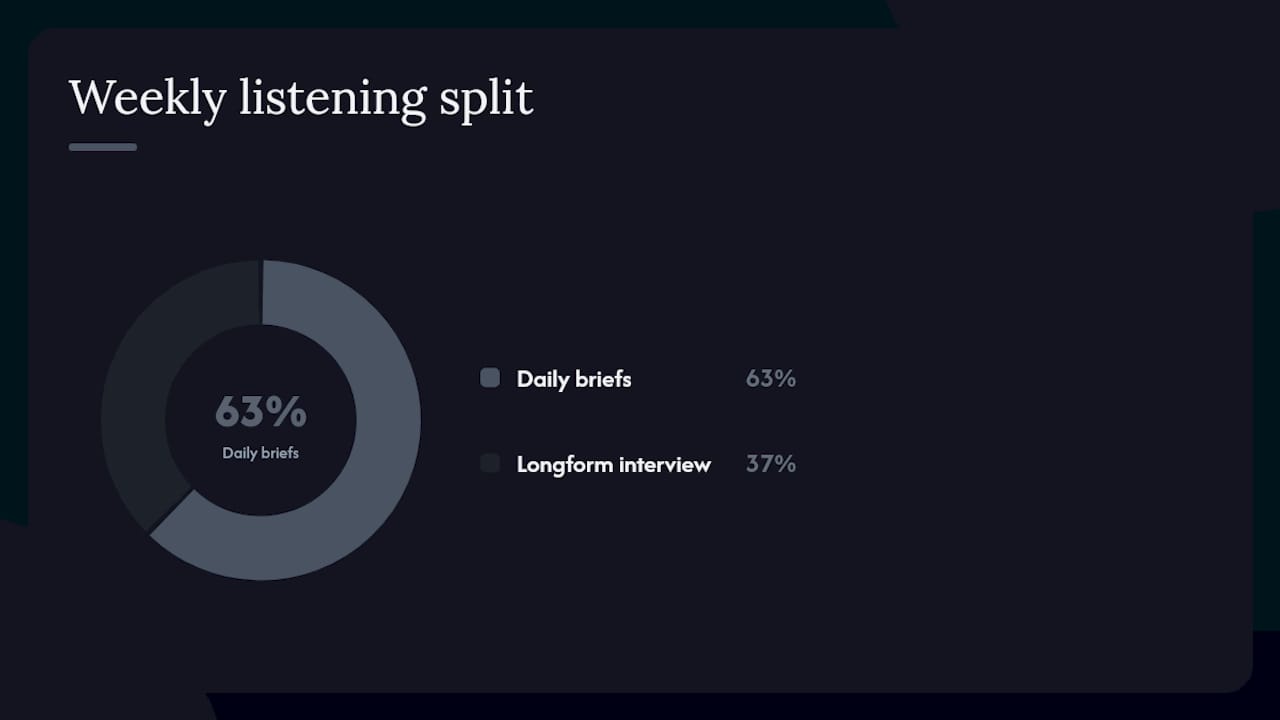
Combine one daily brief (20–30 minutes, five days) with one longform interview per week (60–90 minutes). That’s roughly three hours of political audio weekly — enough to stay current without the fatigue that comes from trying to follow every show every day.
Pro Tip: Rotate formats deliberately: two days of news briefs, two days of opinion commentary, one longform interview. The variety keeps your perspective from narrowing and prevents the repetition fatigue that hits listeners who follow only one host.
For listeners who want to actively seek out perspectives that challenge their assumptions, this guide to finding contrarian political viewpoints is worth bookmarking alongside your regular playlist.
What does it cost to listen to conservative podcasts?
Most conservative podcasts are free. Here’s how the models actually break down:
- Ad-supported free: The majority of shows on Gopcast, including The Dan Bongino Show and Brian Kilmeade Show, are free with host-read or dynamically inserted ads. You hear a few ads per episode; no payment required.
- Premium subscriptions: Some hosts offer ad-free feeds or bonus episodes through their own subscription tiers (typically $5–$10/month directly through the show’s website or Apple Podcasts Subscriptions).
- Patreon-style backer tiers: Hosts like Crowder offer tiered memberships with exclusive content, early access, or community access for paying supporters.
- Network paywalls: A small number of shows lock full archives or live streams behind a network subscription.
Gopcast’s web player is free to use. Conservative news podcast listeners tend to be relatively affluent and more responsive to ads than average listeners, which is why the ad-supported model works well for this audience and keeps most content free.
Most bonus content is community-focused, not news-critical. Use free trials before committing, and audit your subscriptions every quarter to cut duplicates.*
Gopcast puts every conservative podcast in one place

Gopcast is the single portal for conservative podcast listeners who are tired of managing five different apps for five different shows. The platform aggregates top right-leaning programs — The Dan Bongino Show, Bannon’s War Room, Louder with Crowder, Brian Kilmeade Show, Perino on Politics, Diamond and Silk, Lou Dobbs, and more — under one roof, with curated categories covering news, commentary, interviews, activism, health, and comedy.
Every show streams free on the web player. Browse by category, jump to a specific host, or let the curated conservative podcast directory surface something new. Shows like The Sentinel Report, The Hope Report, and The Secretary Kennedy Podcast round out the catalog beyond the flagship names.
Visit Gopcast to start streaming now — no account, no subscription, no app download required.
The case for a curated hub over scattered subscriptions
Conservative podcast listeners don’t lack options. What they lack is a single place where the best shows are already vetted, organized, and ready to stream. The fragmentation problem is real: a listener following five hosts across Apple Podcasts, YouTube, Spotify, and individual show websites spends more time managing feeds than actually listening.
Gopcast’s approach cuts that friction. Aggregating shows by category rather than by network means you can browse “daily news brief” or “longform interview” without knowing in advance which host fits your morning. That discovery layer matters most for listeners new to the format, but it also helps veterans find shows they’ve missed.
The platform’s role is curation, not creation. Gopcast doesn’t produce the shows; it surfaces them. That distinction is worth stating plainly: the hosts retain their own editorial independence, and Gopcast’s value is in reducing the friction between a listener and the content they’re looking for. If you want to see the full catalog before committing to a routine, the best conservative podcasts overview is a good starting point.
Sources
- How Republicans and Democrats engage with podcasts — Pew Research Center
- Americans now listen to podcasts more often than talk radio, study shows | TechCrunch
- News Podcasts Hit Record Highs Amid Conservative Listener Growth — Inside Radio
- Podcasts and political listening: sound, voice and intimacy in the Joe Rogan Experience — Taylor & Francis (Continuum)