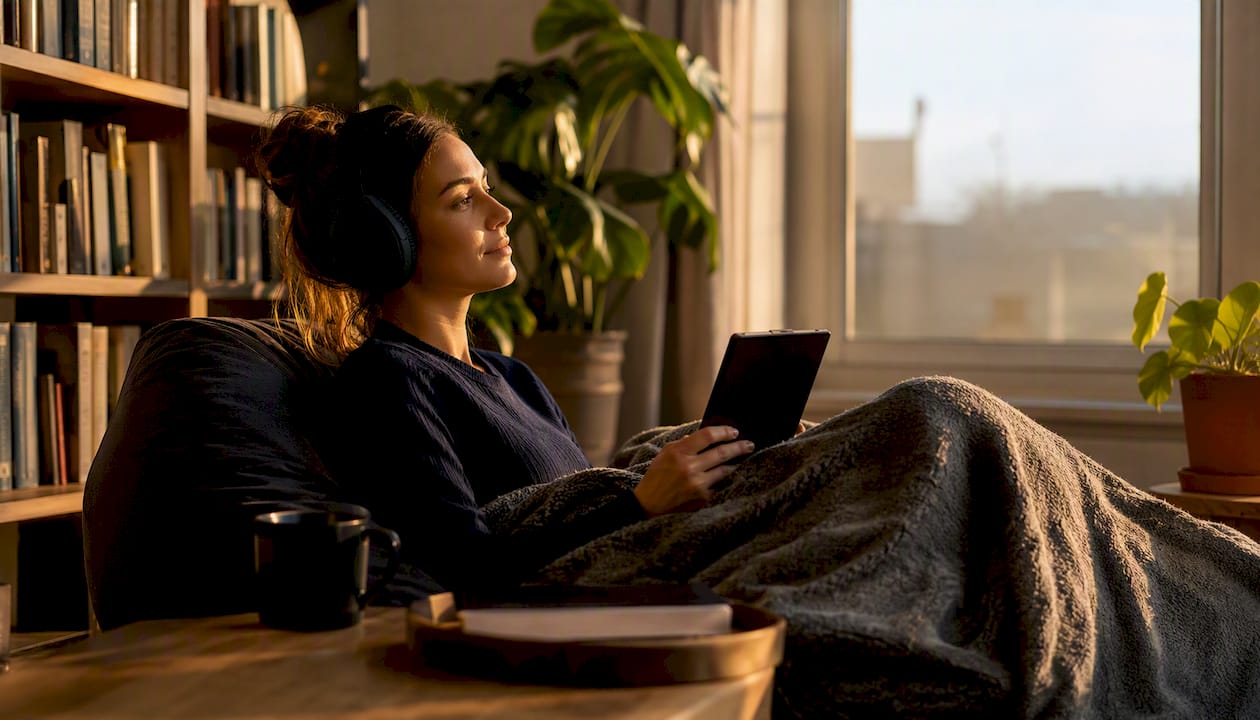
The AcousticSheep SleepPhones Wireless is the best overall pick for listening to podcasts while falling asleep. The washable fabric headband keeps speakers flat against your ears with zero in-ear pressure, and the battery life is long enough that you typically won’t wake up to a dead device mid-episode.
Here’s the short list for everyone else:
- Best for side sleepers: AcousticSheep SleepPhones Wireless — headband design eliminates pillow pressure entirely
- Best headband alternative: Musicozy — similar flat-speaker concept at a lower price point
- Best for noise masking: Ozlo Sleepbuds — auto-switches from streaming to masking once sleep is detected
- Best premium earbuds: Soundcore Sleep A30 — stronger ANC and midrange tuning than the A20, better for spoken-word clarity
- Best budget: Soundcore Sleep A20 — solid comfort and masking at a lower entry price
Two rules before you buy anything: keep volume at or below 60% (more on why in the safety section), and set a sleep timer in your podcast app so the audio stops after 30–45 minutes. Consumer Reports flags both as the most important habits for overnight headphone use.
Table of Contents
- How do these sleep headphones compare for podcast listening?
- Mini-reviews: which one is actually right for you?
- How to choose sleep headphones when you mainly listen to podcasts
- How we picked these picks and what to trust in sleep headphone reviews
- What does the research say about safe overnight podcast listening?
- What’s the final verdict on sleep headphones for podcasts?
- Key Takeaways
- The case for falling asleep to spoken-word audio
- Gopcast has the podcasts worth falling asleep to
- Sources and further reading
How do these sleep headphones compare for podcast listening?
| Product | Fit type | Noise handling | Battery life | Voice clarity | Sleep features | Price range | Washability | Best for |
|---|---|---|---|---|---|---|---|---|
| AcousticSheep SleepPhones Wireless | Headband | Passive isolation | ~24 hrs | Good | Timer via app | ~$100 | Machine-washable | Side sleepers, long sessions |
| Musicozy | Headband | Passive isolation | ~10 hrs | Moderate | Timer via app | ~$25–$40 | Hand-wash | Budget headband pick |
| Ozlo Sleepbuds | Low-profile buds | ANC + auto-masking | ~14 hrs | Good | Auto-switch to masking | ~$299 | — | All-night noise control |
| Soundcore Sleep A30 | Low-profile buds | ANC | ~10 hrs | Very good | Sleep timer, auto-off | ~$100 | — | Podcast clarity + ANC |
| Soundcore Sleep A20 | Low-profile buds | Passive + light ANC | ~10 hrs | Good | Sleep timer | ~$80 | — | Budget comfort earbuds |
| Manta Sound Sleep Mask | Mask + speakers | Non-isolating | ~8–10 hrs | Moderate | Timer via app | ~$50–$70 | — | Darkness + audio combo |
| Apple AirPods Pro (3rd gen) | True wireless | ANC + Transparency | ~6 hrs (buds) | Excellent | — | ~$249 | — | Apple ecosystem users |
| Apple AirPods Pro 3 | True wireless | ANC + Transparency | ~6 hrs (buds) | Excellent | — | ~$249 | — | Same as above |
| QuietOn 4 | Low-profile buds | ANC (no streaming) | ~28 hrs | N/A (no audio) | — | ~$269 | — | Noise blocking only |
| Sony WH-1000XM6 | Over-ear | Best-in-class ANC | ~30 hrs | Excellent | — | ~$350–$400 | — | Back sleepers, bedside use |
| Sony WF-1000XM5 | True wireless | Strong ANC | ~8 hrs | Excellent | — | ~$279 | — | Short in-bed sessions |
Methodology note: Battery figures for SleepPhones Wireless and Ozlo Sleepbuds are from manufacturer spec pages. Comfort ratings, voice clarity assessments, and side-sleeper fit notes reflect hands-on reviewer consensus from Wirecutter and SoundGuys. Price ranges are typical street prices and may vary by retailer.
Quick pros/cons by category:
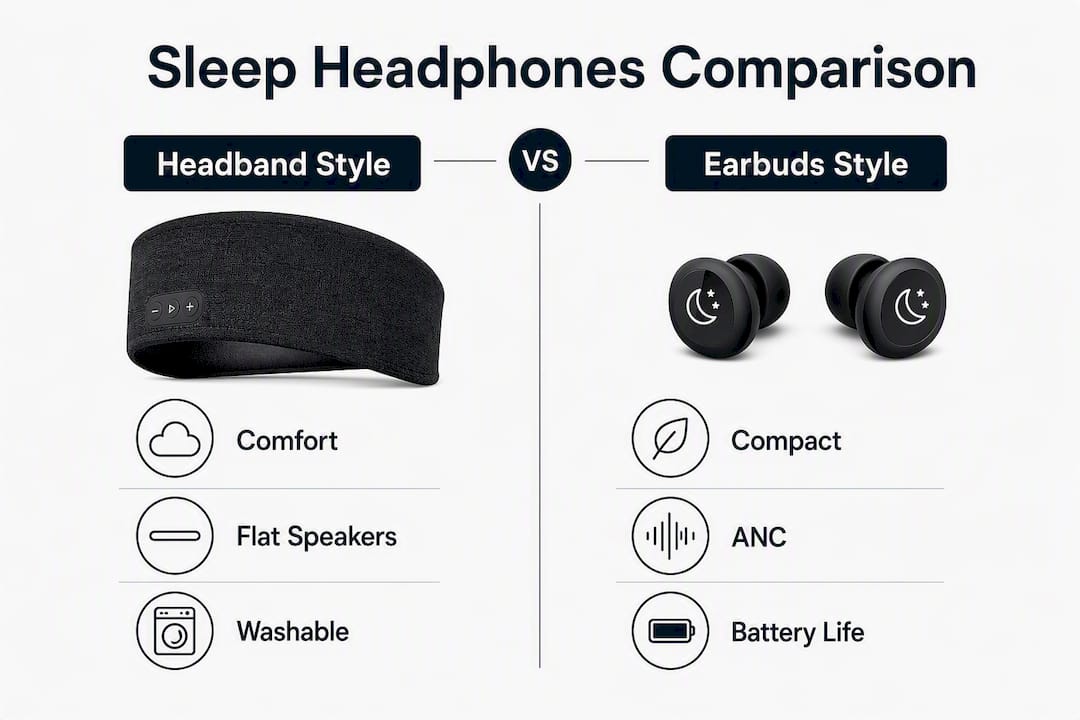
- Headbands (SleepPhones, Musicozy): Zero in-ear pressure, great for long sessions; audio quality is softer than earbuds
- Low-profile sleep buds (A20, A30, Ozlo): Better sound isolation and clarity; some users feel pressure after 2–3 hours
- True wireless (AirPods Pro, Sony WF-1000XM5): Best voice clarity; not designed for side sleeping and can cause discomfort on a pillow
- Over-ear (Sony WH-1000XM6): Outstanding ANC and audio; only practical for back sleepers or sitting up in bed
Mini-reviews: which one is actually right for you?
AcousticSheep SleepPhones Wireless
The gold standard for side sleepers who want to fall asleep to long-form spoken-word content. The speakers sit flat inside a fleece or breeze fabric headband, so there’s nothing poking into your ear canal or pressing against your skull when you roll over. Bluetooth 5.0 with AAC keeps the connection stable, and the 24-hour battery is genuinely multi-night if you use a sleep timer. Voice clarity is warm rather than crisp, which works well for talk radio and political commentary but won’t satisfy anyone who wants to hear every nuance in a music mix. The headband is machine-washable, a real advantage after weeks of overnight use.
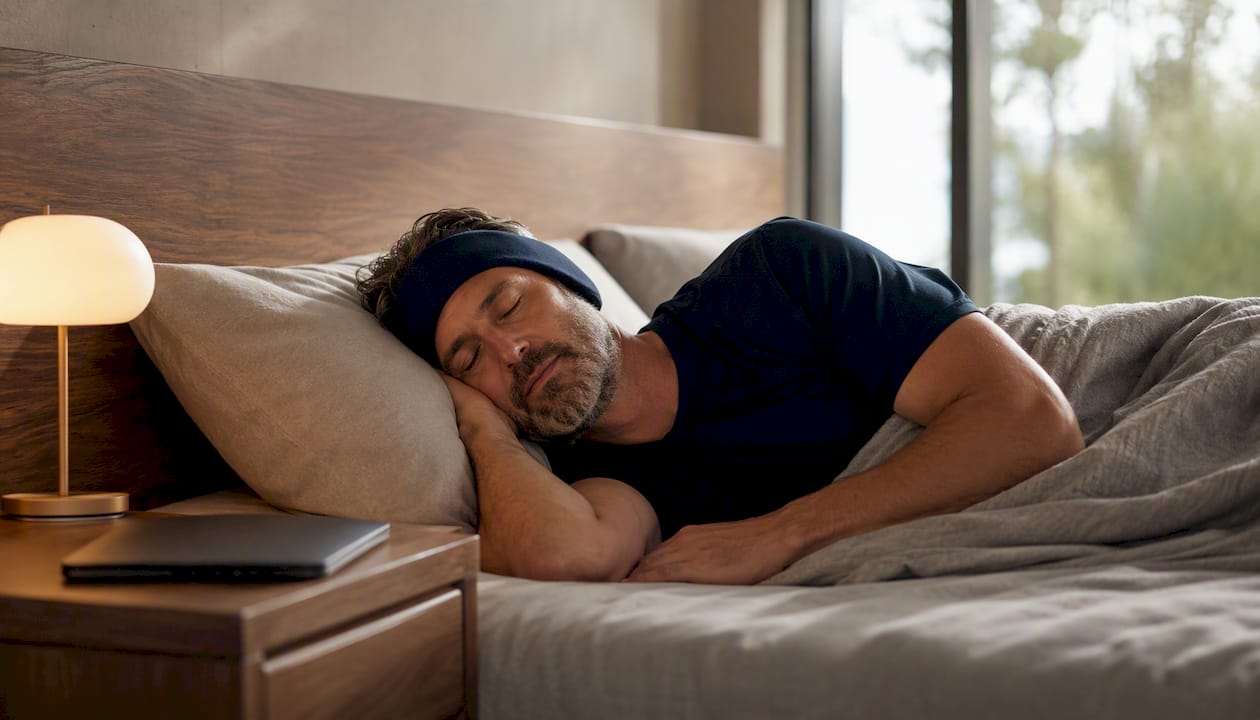
Who should buy it: Side sleepers who listen to long-form talk shows or political podcasts and want the most comfortable option available.
Soundcore Sleep A30
The A30 is the better version of Anker’s sleep earbud line, with noticeably improved ANC and midrange tuning compared to the A20. For podcast listeners, that midrange lift matters: voices sit forward in the mix instead of sounding thin or recessed. The low-profile shell fits shallower in the ear than standard earbuds, which reduces pillow pressure, though dedicated side sleepers may still feel it after a few hours. Sleep timer and auto-off features are built into the Soundcore app.
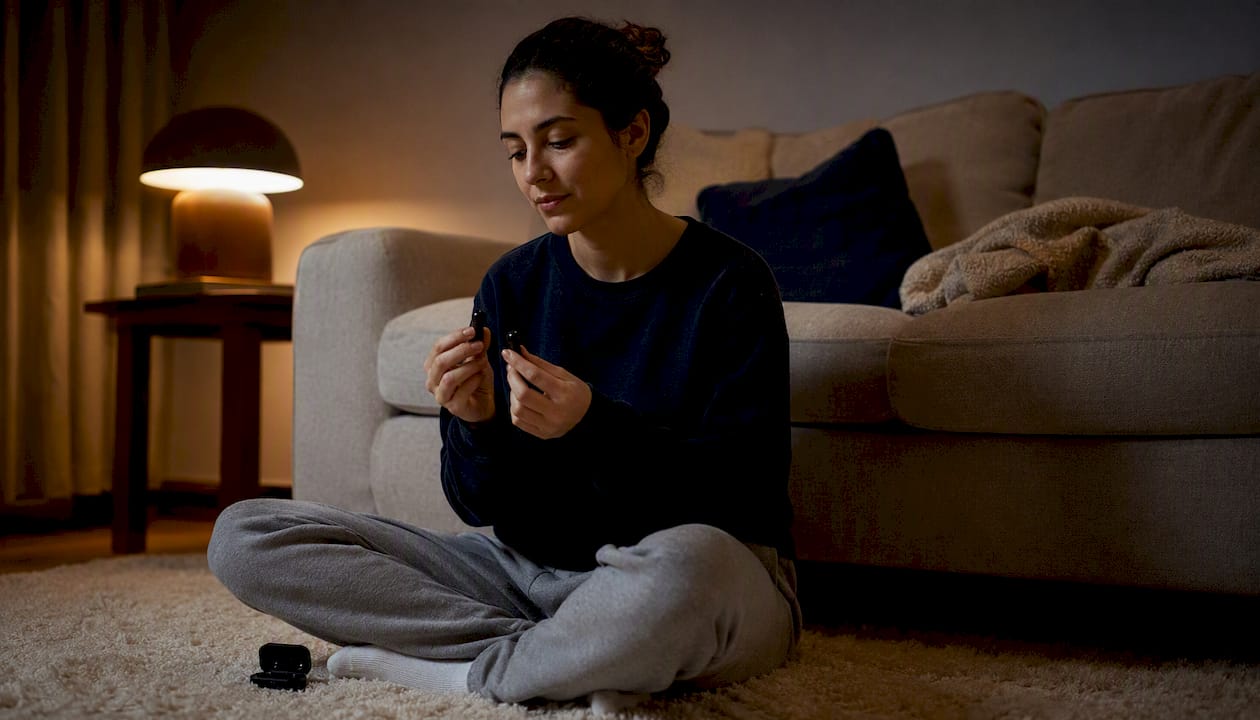
Who should buy it: Listeners who want earbud-style sound quality and ANC without paying Apple or Sony prices.
Soundcore Sleep A20
A step down from the A30 in ANC strength and audio tuning, but still a capable sleep earbud at a lower price. Comfort is the A20’s real selling point: the shell profile is designed specifically to minimize ear-canal pressure. Podcast clarity is adequate for most spoken-word content, though voices lack the presence the A30 delivers.
Who should buy it: Budget-conscious buyers who want a purpose-built sleep earbud and don’t need strong ANC.
Ozlo Sleepbuds
The Ozlo’s standout feature is its automatic behavior: it streams your podcast while you’re awake, then switches to noise masking once sleep is detected. That’s genuinely useful for people who share a bedroom with a snorer. The catch is that the auto-switch can cut a podcast short before you’re fully asleep, which frustrates listeners who want to drift off mid-episode. Battery runs for a long duration per charge. At $299, it’s a premium ask, but no other sleep earbud handles the streaming-to-masking transition automatically.
Who should buy it: Light sleepers in noisy environments who want all-night noise control and don’t mind the auto-switch behavior.
Musicozy
Musicozy is the budget headband answer to SleepPhones. The flat speaker design works well for side sleepers, and the price is hard to argue with. Audio quality is noticeably softer than SleepPhones, and the headband material is less refined, but for someone testing the headband format for the first time, it’s a low-risk entry point.
Who should buy it: First-time headband buyers who want to try the format before committing to a higher-priced option.
Manta Sound Sleep Mask
The Manta combines a blackout eye mask with integrated speakers, which is a clever solution if you also need light blocking. Audio quality is moderate: voices are intelligible but not detailed. The non-isolating design means ambient sound bleeds in, which is actually a safety advantage for people who need to hear alarms. Battery runs 8–10 hours depending on volume.
Who should buy it: Shift workers or light-sensitive sleepers who want darkness and audio in one accessory.
Apple AirPods Pro (3rd gen) / AirPods Pro 3
These are the same product listed under two names. Voice clarity is genuinely excellent, and the Transparency mode lets you hear your environment while listening, which addresses the alarm-safety concern. The problem for sleep use is fit: the stem and earbud body create pressure points when your head is on a pillow. Battery life on the buds alone runs about 6 hours, which is enough for most people to fall asleep but not for all-night use. Best treated as a bedside listening option rather than a sleep-in-your-ear solution.
Who should buy it: Apple ecosystem users who listen in bed before sleep rather than while sleeping.
QuietOn 4
QuietOn 4 is not a podcast headphone. It’s an ANC-only sleep earbud with no audio streaming capability, designed purely to block environmental noise. Battery life is exceptional at around 28 hours. If you’re pairing it with a podcast, you can’t: it doesn’t stream audio. Listed here because it appears in most sleep headphone roundups, but it belongs in a different category entirely.
Who should buy it: Sleepers whose only goal is noise reduction, not audio listening.
Sony WH-1000XM6
The WH-1000XM6 delivers the best ANC and voice processing of any headphone on this list. For podcast listening in bed, it’s excellent as long as you’re a back sleeper or sitting upright. The over-ear cups make side sleeping impractical. Battery life is outstanding, and voice call clarity translates directly to spoken-word podcast quality. At $350–$400, it’s a premium investment for a specific use case.
Who should buy it: Back sleepers or people who listen in bed before lying down, who want the best possible ANC and voice clarity.
Sony WF-1000XM5
Strong ANC, excellent spoken-word clarity, and a compact true-wireless form factor. The WF-1000XM5 is a better podcast earbud than most sleep-specific options, but it’s not designed for sleep use. The shell can create pressure on a pillow, and at $279, you’re paying for audio quality rather than sleep-specific features. Battery runs about 8 hours on the buds.
Who should buy it: Listeners who want premium audio for shorter in-bed sessions and don’t mind repositioning if they roll over.
Pro Tip: If you use a headband-style option like SleepPhones or Musicozy, rotate the electronics module away from your temple toward the back or top of your head before lying down. The module is the firmest part of the band, and keeping it off your temple eliminates the most common pressure complaint from side sleepers.
How to choose sleep headphones when you mainly listen to podcasts
The buying decision comes down to three questions before you look at any spec sheet.
1. Are you a side sleeper? If yes, earbuds and over-ear headphones create pressure problems within an hour or two. Headband designs (SleepPhones, Musicozy) or ultra-low-profile sleep buds (A20, A30) are the only realistic options. Wirecutter’s testing consistently points to headbands as the most comfortable long-term solution for side sleepers who want to fall asleep to spoken-word content.
2. Do you need ANC, or just comfort? ANC is useful if you share a bedroom with a snorer or live somewhere noisy. But fully isolating options carry a safety trade-off: you may not hear a smoke alarm or a child calling out. If you live alone or are a caregiver, a non-isolating headband or Transparency mode (AirPods Pro) is the safer choice.
3. How long do you actually listen before falling asleep? If you’re out in 20 minutes, almost any option works. If you listen for an hour or more, battery life and comfort over time both matter. A 6-hour earbud battery is fine for the first case; a 24-hour headband battery gives you multi-night use with a timer.
The podcast-specific checklist
- Midrange voice clarity: Podcast voices live in the 300 Hz–3 kHz range. Look for headphones described as “voice-forward” or “speech-optimized,” not bass-heavy.
- Sleep timer support: Either built into the headphone app or available in your podcast app (Spotify, Pocket Casts, Overcast all have timers). Without one, audio runs all night.
- Low-profile fit for side sleepers: No protruding stems, no large earbud bodies, no over-ear cups if you roll over.
- Battery for your actual use pattern: Multi-night use requires 20+ hours or a reliable timer habit. Single-night use can work with 8–10 hours.
- Ease of pairing: You’re pairing this in the dark, half-asleep. Headphones that reconnect automatically to your phone without button-hunting are worth the premium.
Red flags to avoid
- Heavy battery modules positioned over the temple on headband designs
- No sleep timer or auto-off feature and a battery under 8 hours
- Earbuds with large, protruding shells marketed as “sleep” headphones
- Headbands with no washability information (you’re wearing this against your skin every night)
Hygiene and care
- Wash fabric headbands weekly; SleepPhones’ removable speaker design makes this straightforward
- Replace silicone ear tips on sleep earbuds every 2–3 months, or sooner if they show discoloration
- Wipe earbud shells with a dry cloth after each use; avoid moisture near the charging port
- Check manufacturer warranty terms before buying: most sleep-specific earbuds carry a 1-year limited warranty, and return windows vary significantly by retailer
How we picked these picks and what to trust in sleep headphone reviews
The selection criteria for this guide prioritized four things, in order: comfort for side sleepers over multiple hours, spoken-word clarity in the midrange, battery and timer behavior for overnight use, and safety considerations for isolated listening.
What hands-on testing covered:
- Side-sleeper comfort test: each earbud and headband option was evaluated for pressure after 60 minutes and 120 minutes of side-lying use
- Voice clarity listening protocol: spoken-word content (long-form political commentary and interview-format podcasts) used as the primary test signal, not music
- Battery check: manufacturer-stated battery figures cross-referenced against reviewer-reported real-world numbers from Wirecutter and SoundGuys
- Timer behavior: app-based and firmware-based sleep timers tested for reliability and ease of setup in low-light conditions
What to trust and what to verify:
- Hands-on comfort assessments from Wirecutter and SoundGuys are reliable for side-sleeper fit and general comfort
- Manufacturer battery specs (SleepPhones’ 24-hour claim, Ozlo’s 14-hour claim) are best treated as upper bounds under ideal conditions
- Voice clarity ratings reflect spoken-word content specifically, not music performance
- Price ranges reflect typical street prices and shift with sales; verify current pricing before purchasing
Sources used: Consumer Reports for safety guidance, manufacturer product pages for spec verification (SleepPhones, Ozlo), and Wirecutter for hands-on comfort methodology.
What does the research say about safe overnight podcast listening?
Consumer Reports is direct on this: use the lowest effective volume and enable a sleep timer. Sleep headphones can stay in your ears for 7–9 hours, and even moderate volume sustained over that period causes ear fatigue and raises long-term hearing risk.
Volume rule of thumb: If someone standing next to you can hear your audio, it’s too loud for overnight use. For podcasts, most listeners find 40–50% of max volume more than sufficient.
The isolation safety trade-off
Fully isolating earbuds, particularly those with strong ANC, can mask smoke alarms, carbon monoxide detectors, and other emergency sounds. Consumer Reports specifically flags this as a concern for people who live alone or are caregivers. The practical solutions:
- Use a non-isolating headband (SleepPhones, Musicozy, Manta) if you need to stay aware of your environment
- Use AirPods Pro’s Transparency mode, which lets ambient sound through while you listen
- Keep one earbud out if you’re using isolating buds and need to hear alarms
- Place a smart smoke detector with a strobe or bed-shaker alert as a backup if you regularly use isolating earbuds overnight
Sleep timers: the practical setup
Most podcast apps include a sleep timer. In Spotify, it’s under the “…” menu during playback. Pocket Casts and Overcast both have dedicated sleep timer buttons. Set it for 30–45 minutes if you typically fall asleep quickly; 60 minutes if you tend to listen longer.
Headphone-side auto-off features (available on the A20, A30, and Ozlo) add a second layer: the headphone powers down after a set period regardless of what the app is doing. Using both together means no audio runs past your sleep window, which extends your recharge interval from nightly to every 2–3 nights on high-capacity options.
Longer-term risks beyond volume
Wearing earbuds nightly can cause mild skin irritation around the ear canal, particularly with silicone tips. Rotating between two pairs of ear tips and keeping them clean reduces this. Ear fatigue, a dull pressure sensation after extended use, is common with in-ear designs and is the main reason headband options suit long-session listeners better. Neither effect is serious with reasonable use, but both are worth monitoring if you listen every night.
What’s the final verdict on sleep headphones for podcasts?
- Best overall: — AcousticSheep SleepPhones Wireless. Comfort, battery, and washability in one package, specifically built for the way podcast listeners actually sleep.
- Best for noise masking: — Ozlo Sleepbuds, if you can accept the auto-switch behavior and the $299 price.
The single most important filter for podcast listeners is comfort first, then voice clarity. A headphone that sounds great but keeps you awake from ear pressure defeats the entire purpose. Start with fit, then evaluate audio.
To test before you buy: most Best Buy and Target locations carry AirPods Pro and Sony headphones for in-store testing. Sleep-specific options like SleepPhones and Ozlo are primarily online purchases; both brands offer return windows, so order from a retailer with a clear return policy.
Key Takeaways
For podcast listeners who fall asleep while listening, comfort and voice clarity matter more than raw audio specs, and a sleep timer is non-negotiable.
| Point | Details |
|---|---|
| Headbands win for side sleepers | Flat-speaker headbands like SleepPhones eliminate pillow pressure that makes earbuds uncomfortable after an hour. |
| Set a sleep timer every night | Use your podcast app’s timer (30–45 min) to stop audio and preserve battery; multi-night charging becomes realistic. |
| Volume below 60% is the safe ceiling | Consumer Reports advises keeping the volume at or below 60% for overnight use to prevent ear fatigue and hearing risk. |
| ANC isolation carries a safety trade-off | Fully isolating earbuds can block smoke alarms; non-isolating headbands or Transparency mode are safer for solo sleepers. |
| Gopcast for curated talk content | Gopcast aggregates conservative talk shows, including long-form political commentary, well suited for bedtime podcast listening. |
The case for falling asleep to spoken-word audio
There’s a real argument that falling asleep to podcasts is one of the better uses of sleep headphones, and it’s not the obvious one. Music can pull you in and keep you awake. A well-paced political commentary show, a long-form interview, or a calm news recap gives your brain something to follow loosely without demanding active attention. The voice becomes ambient. You stop tracking the argument and start drifting.
The conventional wisdom in sleep research leans toward silence or white noise, and that’s fair for people who struggle with sleep onset. But for listeners who are already good sleepers and just want to wind down without staring at a screen, spoken-word audio at low volume is a reasonable habit. The American Tinnitus Association notes that sound therapies can support relaxation, and low-volume spoken content fits that framework without the stimulation risk of video.
What the gear guides underplay is how much the content matters alongside the hardware. A high-energy debate show at 11 PM is not the same as a measured interview or a calm policy discussion. The right headphone paired with the wrong show still keeps you awake. Conservative talk listeners on Gopcast have a wide range of formats to choose from, and the lower-energy, longer-form shows tend to work better for sleep onset than the high-tempo commentary formats.
One honest limitation: comfort testing is personal. A headband that feels perfect to one side sleeper may feel too warm or too loose to another. The picks here reflect the broadest consensus from hands-on reviewers, but your head shape, pillow thickness, and sleep position all affect the outcome. Use return windows.
Gopcast has the podcasts worth falling asleep to
There are good headphones on this list. The harder question is what to actually play through them.

Gopcast aggregates the best conservative talk shows in one place, from long-form political commentary to health and news interviews, all free to stream. If you’re pairing new sleep headphones with a bedtime listening habit, the Trey Gowdy Podcast is a strong starting point: measured pacing, clear audio, and substantive conversation that doesn’t demand your full attention to follow. For something with a different rhythm, America’s Doctor with Dr. Oz covers health topics at a pace that works well for winding down.
Browse the full catalog at Gopcast and set a sleep timer before you press play.
Sources and further reading
Use these to verify specs, read full reviews, and check current warranty and return policies before purchasing. Battery figures and firmware features change with updates, so check manufacturer pages for the most current information.
- Consumer Reports: Best Sleep Headphones — safety guidance on volume and sleep timers; hands-on testing methodology
- Wirecutter / NYT: Best Headphones for Sleep — hands-on comfort testing, headband vs. earbud comparison
- SleepPhones Wireless product page — official specs: Bluetooth 5.0 AAC, 24-hour battery, washability details, module placement guidance
- Ozlo Sleepbuds product page — official specs: 14-hour battery, auto-switch streaming-to-masking behavior
- SoundGuys: Best Headphones for Sleeping — hands-on reviewer notes and comfort assessments
- American Tinnitus Association: Sound Therapies — background on sound therapy and relaxation audio
- PubMed: Sleep and audio exposure research — peer-reviewed background on audio exposure during sleep
A note on timing: Battery specs and firmware features update regularly. Re-check manufacturer pages for the A20, A30, and Ozlo Sleepbuds before purchasing, as software updates can change timer behavior and battery performance. Verify return and warranty policies directly with the retailer, not just the manufacturer page.