
There are two ways to think about podcast ad formats. The first is how the ad is made: read by the host, or recorded by someone else. The second is where it sits in the episode: before, during or after the content. Most 2026 campaigns combine both choices. Host-read and recorded spots lead in usage, dynamic insertion is growing fastest, and video versions of shows are adding a third layer. Below, each format is explained in plain terms, with typical costs, listener-experience trade-offs and measurement basics. We publish this at GOPcast.com, where listeners find conservative political podcasts in one place, so we pay close attention to how sponsors reach that audience.
TL;DR
- Two production styles: host-read ads (in the host’s own voice) and pre-recorded or announcer-read spots (written and produced by the advertiser or network).
- Three placements: pre-roll (start), mid-roll (middle), post-roll (end). Mid-roll carries most impressions, according to figures cited by a podcast-network guide.
- Two delivery methods: baked-in (permanent in the file) or dynamically inserted (placed by an ad server at download or stream time).
- Typical 2026 CPMs: roughly $25 to $40 for host-read, $15 to $30 for pre-recorded, and $5 to $30 for dynamic insertion, per one widely cited guide.
- Biggest open problem: measurement. Definitions keep shifting, and buyers still debate what counts as a delivered ad.
Table of Contents
- The main podcast ad formats, at a glance
- Host-read ads
- Pre-recorded and announcer-read ads
- Pre-roll, mid-roll and post-roll
- Baked-in versus dynamically inserted ads
- Sponsorships, custom segments and branded content
- Video podcast advertising
- What each format costs
- How to choose a format
- Measurement: what counts as a delivered ad
- Our perspective
- Reaching conservative listeners with GOPcast
- FAQ
- Sources
The main podcast ad formats, at a glance
It helps to separate three questions that often get blurred together. Who speaks the ad? Where does it play? How does it reach the listener’s ears? Any single ad answers all three. A baked-in host-read mid-roll is one combination. A dynamically inserted announcer-read pre-roll is another.

The IAB Podcast Playbook, the U.S. industry body’s reference document, defines the standard ad units as pre-rolls, mid-rolls and post-rolls. It also lists the creative treatments: host or announcer reads, pre-recorded ads, endorsement ads, custom segments, branded series and presenting sponsorships. The document dates from 2017, but the vocabulary is still the one buyers and sellers use today.
Usage data shows which of these dominate. IAB Australia’s 2026 Audio Advertising State of the Nation report found that recorded spots and host-read ads remain the most used podcast creative formats in that market. 84% of surveyed advertisers had used recorded spots and 82% had used host-read ads, each up 5 percentage points on the year before. It is an Australian survey, but it matches the pattern advertisers describe elsewhere.
Host-read ads
A host-read ad is delivered by the person listeners already follow, in their own words and rhythm. Often the host works from talking points rather than a script. The ad can be personal: a story about using the product, a reaction, an aside.
Why advertisers buy them: the ad sounds like the show. In a listener survey reported by eMarketer in January 2026, 52% of podcast consumers named host-read ads that feel personal among the formats they were most likely to pay attention to. Casual brand mentions during a show topped that list at 59%.
What to watch for:
- They cost more per thousand downloads than produced spots.
- They take longer to arrange, since the host needs a brief and often a sample product or a clear set of points.
- When they are baked in, they cannot be swapped out after the episode is published.
For political talk, trust matters even more. Listeners of a long-running show such as Bannon’s War Room or The Dan Bongino Show hear the host as a familiar voice, and a read that fits that voice usually lands better than a generic spot. That is why host-read ads suit brands that care about credibility with an engaged audience.
Pre-recorded and announcer-read ads
A pre-recorded ad is a finished audio spot, usually 15 to 60 seconds, voiced by a professional announcer or a voice actor, sometimes with music. The advertiser controls every word. The same file can run across many shows.
That control brings three advantages:
- Consistency. The message, claims and legal wording are identical on every show.
- Speed and reach. One recording can be placed on many shows quickly.
- Cost. A 2026 sponsorship-rates guide puts pre-recorded ads at roughly $15 to $30 CPM, compared with $25 to $40 CPM for host-read mid-rolls.
The trade-off is tone. A produced spot sounds like an ad because it is one. Brands that need fixed wording, such as a time-limited offer or a regulated claim, often accept that trade. Many plans pair a core of host-reads with produced spots for extra reach.
Pre-roll, mid-roll and post-roll
Placement describes where in the episode the ad plays.
| Placement | Where it plays | Typical use |
|---|---|---|
| Pre-roll | Before the content begins | Short brand message, sponsor tag, awareness |
| Mid-roll | During a natural break in the episode | Main selling message, offers, host-reads |
| Post-roll | After the content ends | Reminders, secondary messages |
Mid-roll is the workhorse. A May 2026 guide for podcast creators cites the IAB as saying mid-rolls account for the majority of ad impressions served. Listeners are already invested by that point, so completion is generally better than at the very start or end.
Pre-roll gets attention early but sits at the moment when some listeners are still skipping ahead or settling in. Post-roll is the cheapest slot because many listeners leave before it. Advertisers who want a single message to stick usually avoid putting everything in post-roll.
A practical pattern for a weekly show is one short pre-roll, one or two mid-rolls and, if the budget allows, a closing mention. That keeps the ad load manageable for the listener while giving the sponsor several chances to be heard.
Baked-in versus dynamically inserted ads
This is a delivery distinction, separate from who reads the ad.
Baked-in ads are recorded into the episode. Per the IAB Podcast Playbook, they stay part of the content for its lifetime, so everyone who downloads the file hears the same ad.
Dynamically inserted ads (DAI) are served through an ad server and placed on demand when a file is requested. The same source describes the benefits as precise scheduling, targeting and delivery reporting.
In practice:
- Baked-in suits evergreen sponsorships and host-reads where the ad is part of the show’s personality.
- DAI suits campaigns that need to start and stop on a date, change creative midweek, or aim at a geography or audience segment. It also lets an advertiser reach listeners of older episodes with a current message.
Market research points the same way. BlueWeave Consulting’s 2026 to 2032 report on the European podcast advertising market says host-read ads remain the largest segment, while dynamically inserted ads are the fastest-growing. The two models are complements, not rivals.
Sponsorships, custom segments and branded content
Beyond individual spots, advertisers can buy larger packages. The IAB Podcast Playbook names three:
- Presenting sponsorships: the brand is tied to the show or a season, often with a mention at the open and host-reads inside the episode.
- Custom segments: a recurring or one-off portion of an episode built around the sponsor’s theme.
- Branded series: a show or series made with or for the brand.
These cost more and take more planning, but they buy association rather than a single message. For a news and commentary show, a presenting sponsorship can fit well: the sponsor’s name appears with a stable, recognizable brand that listeners return to every week.
In the eMarketer survey cited above, 50% of consumers named podcast stories or interviews sponsored by brands among the formats they pay most attention to, and 41% named branded bonus episodes or mini-series. Integrated formats earn attention when they add something to the show rather than interrupt it.
Video podcast advertising
Many shows now publish on video platforms as well as audio feeds. At the 2026 IAB Podcast Upfront, the organization described podcasts moving across RSS, HLS, YouTube, Spotify video, Rumble, FAST, VOD, social clips and live events, with audiences choosing whichever surface suits the moment. That is covered in the IAB’s event recap.
The same recap reports that clips drive discovery: 81% of listeners said a clip led them to a specific episode. It also says audio builds trust with the lowest skepticism of any format, while video captures attention and drives action.
For advertisers, that means a campaign can include a host-read in the audio, a visual placement in the video version and a short clip that travels on social media. Treat these as one buy where possible, so the message stays consistent across surfaces. For a deeper look at how live and recorded formats differ for audiences, see our comparison of livestream versus podcast formats.
What each format costs
Prices are quoted as CPM, the cost per thousand downloads or impressions. They vary by show size, audience, category and season, so treat them as starting ranges, not quotes.
| Format | Typical 2026 CPM range |
|---|---|
| Host-read (mid-roll) | $25 to $40 |
| Pre-recorded spot | $15 to $30 |
| Dynamically inserted | $5 to $30 |
Those figures come from a 2026 guide to podcast sponsorship rates, which draws on data from industry sources. The guide is from a Malaysian edition, and rates in the U.S. can differ by show and category, so use them for orientation.
A quick worked example: a show averaging 50,000 downloads per episode and a $30 CPM costs 50 x $30 = $1,500 for one host-read slot. Two mid-rolls in the same episode would be $3,000, before any package discount. Run the same math at $20 CPM for a produced spot and one placement costs $1,000.
For how pricing looks in political and conservative talk specifically, read our breakdown of what sponsors pay for conservative shows in 2026.
How to choose a format
Start from the goal, then work backward.
- Awareness for a new brand. Presenting sponsorship or host-read mid-rolls on a few shows that listeners return to every week.
- Direct response with an offer. Host-read mid-roll with a vanity URL or promo code, so response can be traced to the show.
- Broad reach on a budget. Pre-recorded spots with dynamic insertion across several programs.
- Time-sensitive message. Dynamic insertion, so creative can change when the offer does.
- Association with a trusted voice. Custom segment or branded series.
Then match the show. A format that works on a comedy program may not suit a serious interview, and the reverse is also true. Listen to a few episodes first, note how the host handles breaks, and write the brief to fit that style. Fans of a show tend to notice when an ad does not sound like it belongs.
Measurement: what counts as a delivered ad
Measurement is where podcast advertising is still catching up. The IAB’s 2026 upfront recap notes that buying infrastructure is consolidating into fewer pipes, while measurement lags because the definitions behind metrics keep shifting. That uncertainty makes some buyers cautious about return on investment.
Two current efforts aim to tighten things up:
- IAB Tech Lab guidelines. Version 2.3 of the Podcast Technical Measurement Guidelines was released for public comment on July 21, 2026. It clarifies measurement from server-side log data, because most apps do not confirm playback on the device, and it addresses video podcasts and duplicate downloads.
- A proposed “podcast play.” According to The Media Leader, the AMP proposal would move from downloads to a play defined as at least 30 consecutive seconds of audio or video. The same report cites an estimate that more than $1bn in ad spend is waiting on the sidelines because of inconsistent measurement.
In practice, advertisers should agree on definitions with the seller before a campaign starts: what counts as an impression, how downloads are filtered and what reporting arrives when. For host-reads, add a promo code or dedicated landing page so some results can be traced directly.
Our perspective
We run GOPcast as one place where listeners find conservative podcasts, and that shapes how we see ad formats.
Politically engaged listeners tend to follow a favorite host closely. Whether it is Bannon’s War Room, The Dan Bongino Show or The Mel K Show, people come back because they trust the voice. We think that is the strongest argument for formats that respect the show: host-read mentions, sponsor tags that fit the program and segments that add something for the audience.
A single hub also matters for sponsors. When listeners can browse news, commentary, interviews and other categories in one portal, a sponsor can think about the audience as a community with shared interests rather than a scatter of disconnected feeds. That is the idea behind how we curate: fewer clicks between the listener and the shows they want.
Our advice to sponsors: pick the format that fits the host’s style, keep the ad load reasonable and match the message to what the audience already cares about.
GOPcast
Reaching conservative listeners with GOPcast
If your audience is politically engaged and right-leaning, it helps to know where they listen. GOPcast brings prominent conservative shows together in a single web hub, so listeners can watch with GOPcast and move between live and recorded programs, plus categories such as news, commentary, interviews, activism, health, comedy and investigative content.
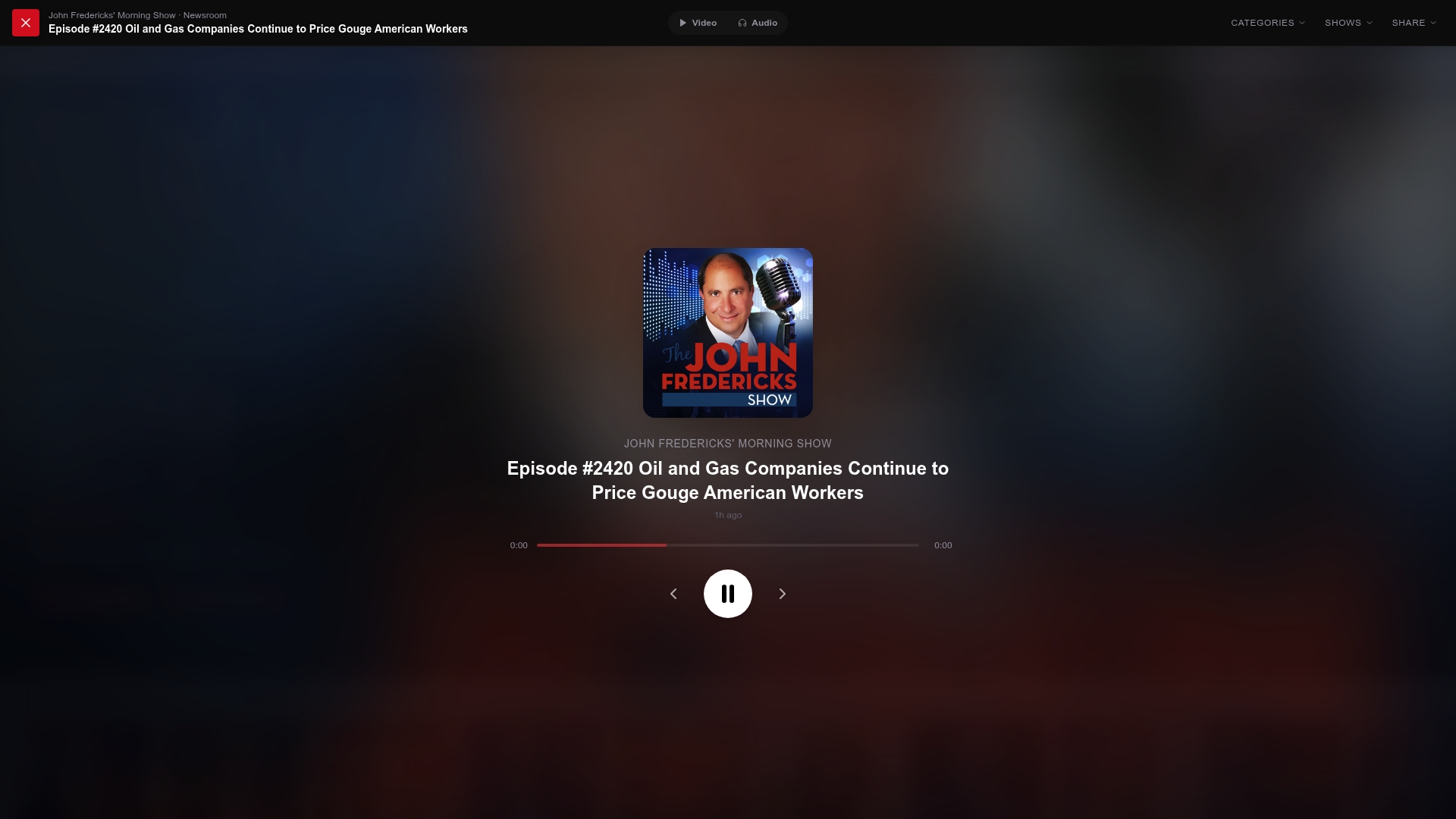
To see the shows, start at GOPcast.com. If you want to understand why these programs draw such loyal audiences, read why conservative podcasts are so popular.
FAQ
What are the most common podcast ad formats in 2026?
Host-read ads and pre-recorded spots are the most used, with pre-roll, mid-roll and post-roll as the standard placements. IAB Australia’s 2026 survey found 82% of advertisers had used host-read ads and 84% recorded spots. Dynamic insertion is the fastest-growing delivery method, and video podcast ads are an increasing add-on.
Are host-read ads better than produced ads?
They serve different goals. Host-reads sound like the show and usually cost more per thousand downloads. Produced spots give the brand full control of the wording and cost less. Many campaigns use host-reads as the core and produced spots for extra reach or fixed messages.
Which placement is best: pre-roll, mid-roll or post-roll?
Mid-roll is the most used, and a guide citing IAB data says it carries the majority of ad impressions. Pre-roll suits short brand messages, and post-roll is typically the cheapest and the least heard. A blend of placements is common.
What is the difference between baked-in and dynamically inserted ads?
A baked-in ad is recorded into the episode and stays there, so every listener hears it. A dynamically inserted ad is placed by an ad server when the file is requested, which allows scheduling, targeting and reporting by campaign. Dynamic insertion lets you change or end a campaign without editing the episode.
How much do podcast ads cost in 2026?
One 2026 guide lists host-read mid-rolls at $25 to $40 CPM, pre-recorded spots at $15 to $30 and dynamic insertion at $5 to $30. Your actual price depends on the show, audience, category and season. Multiply the CPM by downloads in thousands to estimate the cost of one slot.
Sources
- IAB Podcast Playbook
- IAB Australia Audio Advertising State of the Nation Report 2026
- BlueWeave Consulting: Europe Podcast Advertising Market 2026-2032
- eMarketer: Podcast listeners are becoming brands’ most valuable audience
- Guide to podcast sponsorship rates in 2026
- Podcast ad formats in 2026: a deep dive for creators
- 2026 IAB Podcast Upfront recap
- IAB Tech Lab Podcast Technical Measurement Guidelines v2.3
- The Media Leader: podcast measurement proposal