
Conservative entrepreneurship podcasts sit where free-market politics meets the daily work of running a business. Few shows are built only for that overlap, so the smart move is to curate your own mix: one show for policy and regulation, one for faith and values, one for the news cycle that affects your costs. You can sample that mix in one place with GOPcast.com, where conservative shows are gathered into a single, free-to-browse hub.
This guide explains what to listen for, how to judge a show before you commit, and how to turn listening time into something that helps your business.
TL;DR
- Few podcasts are “conservative entrepreneurship” shows in the strict sense. Most listeners build a mix of policy, values and current-affairs shows.
- Judge a show by its recent episodes, its release rhythm and whether the host explains the reasoning behind a position, not by its description.
- Small business owners have a real stake in tax, regulation and labor policy, so political commentary is practical information, not only entertainment.
- Listen actively: take one note per episode and decide on one action per week.
- You can browse and sample conservative shows free at GOPcast, then follow the ones that earn a place in your routine.
Table of Contents
- Why this niche is small, and why that is fine
- What counts as a conservative entrepreneurship podcast
- Sampling shows on GOPcast
- How to judge a show in three episodes
- Match the show to the moment
- Why political commentary belongs in a founder’s week
- Turn listening into action
- Perspective: what we see in the conservative audio space
- Start listening with GOPcast
- A simple four-week listening plan
- Common mistakes to avoid
- FAQ
- Sources
Why this niche is small, and why that is fine
Search for this topic and you will see a mixed bag. Some results are general business interview shows. Some are political shows that touch on business now and then. A few are lists of conservative leadership programs. The keyword itself draws modest search volume, which tells you something: the audience exists, but the category has no clear shelf yet.
That is not a problem. Entrepreneurs have always assembled their own information diet. A founder who wants a conservative perspective rarely needs one show that does everything. They need a few reliable voices who cover the issues that touch a business owner’s life: taxes, regulation, hiring, energy costs, healthcare, speech and the culture around work.
The stakes are real. According to the SBA Office of Advocacy, small businesses make up 99.9% of all U.S. firms, and the office generally defines a small business as an independent one with fewer than 500 employees. When almost every company is a small one, policy debates about paperwork, taxes and labor rules are debates about the kind of business you run.

What counts as a conservative entrepreneurship podcast
It helps to sort shows by what they actually give you. In practice, the shows a conservative business owner reaches for fall into four types.
Policy and regulation shows
These explain how laws and agency rules land on employers. If you hire, ship, import or borrow, this is the type that pays back fastest. We have a separate roundup of small business policy podcasts if you want to go deeper here.
Faith and values shows
Many conservative founders run their companies around a set of convictions, and they look for hosts who talk about work, stewardship and service in that light. These shows tend to be slower, more reflective and more personal.
Current-affairs and activism shows
Daily or near-daily programs that track the news give you context for what is happening to markets, supply chains and public mood. They are less about how to run a company and more about the environment you run it in.
Interview and storytelling shows
Long conversations with people who have built things, whether in business, ministry or community life, are where the practical lessons live. Look for hosts who ask about decisions and tradeoffs, not only wins.
A balanced listening week touches at least three of these four.
Sampling shows on GOPcast
GOPcast gathers conservative programs into one place, so you can move between shows without hunting across apps. Not every show is a business show, and we will not pretend otherwise. What we can say is that these programs are available to sample free, and that you can judge their fit by listening to a few episodes yourself.
Here are several to try first, with a note on how to use each in a business-minded routine:
- Firewall with Lance Wallnau: a good test of whether faith-forward commentary is the kind of voice you want in your week.
- The Road Forward with Tim Clinton: sample an episode and ask whether the host gives you ideas you can carry into your team or family.
- Coming Home: listen with the same question, and note whether the tone suits your commute or your evening.
- The Mel K Show: a commentary-style program, useful for judging how much current-affairs depth you want.
- RAV Breaking Point: try it as a news-cycle show and see whether the pace fits your schedule.
- MAGA Midterm Rally: an activism-oriented program, helpful for understanding the political mood your customers and employees live in.
- Jonathan Shuttlesworth: another voice to add to your sample, so you can compare styles before you commit.
For a wider view of what is available, the Conservative Podcast Directory and our list of top conservative political podcasts show how shows are grouped by category.
How to judge a show in three episodes
A show description is marketing. The episodes are the product. Before you add a podcast to your weekly rotation, give it three episodes, chosen on purpose.
- Pick the newest episode. This tells you whether the show is active and what it sounds like now, not three years ago.
- Pick an episode from a few months back. Check whether the host’s tone, topics and quality are consistent.
- Pick the episode whose title matters most to your business. If you run a restaurant, choose the one about labor or inflation. If you run a contracting firm, choose the one about regulation or energy.
Then ask five questions:
- Does the host explain why they hold a position, or just announce it?
- Are claims specific enough to check, such as a bill, a rule, a number or a named source?
- Does the host separate fact from opinion, even roughly?
- Is the episode length one you can actually fit into your day?
- Did you learn one thing you could act on?
If a show passes four of five, keep it. If it passes two, drop it without guilt. Your listening time is a business resource.
Match the show to the moment
Different parts of the week call for different kinds of audio. This table is a simple way to plan.
| Moment | What helps | Show type |
|---|---|---|
| Morning commute | Context for the day’s news and its effect on your costs | Current affairs |
| Midday walk or lunch | A single focused idea | Policy or interview |
| Evening drive or chores | Reflection on purpose, family, community | Faith and values |
| Weekend | A long conversation you can think about | Interview or storytelling |
The point is not to listen more. It is to listen on purpose, so each show has a job.
Why political commentary belongs in a founder’s week
Some entrepreneurs say they avoid politics to stay focused on the business. That is understandable, but policy arrives whether you follow it or not. The same SBA Advocacy document reports that federal paperwork collections cost small businesses over $81 billion in 2025, and that more than 80% of that burden comes from the IRS. You do not have to enjoy tax policy to see why a host who explains it clearly is worth a listen.
There is also the cultural side. Many conservative owners say the hardest part is not any one regulation but feeling that mainstream coverage does not reflect how they see work, risk and responsibility. That is a large part of why shows with a conservative lens have grown. Our piece on why conservative podcasts are so popular looks at that trend.
Two topics deserve a mention because they cut across industries:
- Health costs. Insurance and benefits are a top concern for any employer. Our guides to conservative health policy podcasts point you to shows that discuss it.
- Online speech and platform risk. If your business depends on social media or search reach, platform rules are a business risk. See our list of big tech censorship podcasts.
Turn listening into action
Audio is easy to enjoy and easy to forget. A simple habit fixes that.
The one-note rule
After each episode, write one sentence: the idea, and what you will do about it. Not a summary. An action, even a small one, such as “ask my accountant about this rule” or “call two customers this week.”
The weekly review
Once a week, spend ten minutes reading your notes. Pick one item and schedule it. Drop the rest. Founders drown in good ideas, and the ones that count are the ones that get a calendar slot.
Share what you learn
Talk through ideas with your team, your peers or your local business group. Listening alone produces opinions. Listening with others produces decisions. If you are thinking about how a founder’s voice can carry a company, the discussion of founder-led marketing is a useful frame for turning what you hear into what you say publicly about your own work.
The same principle applies to community. Shows with loyal audiences work because people feel they belong to something. Businesses that build the same kind of audience around their own customers tend to do well, which is the idea behind community-led marketing for B2B.
Perspective: what we see in the conservative audio space
We built GOPcast because conservative listeners were spread across many apps and sites, and finding reliable voices took more effort than it should. Our approach is simple: put the shows in one place, organize them by category, and let you listen free.

Here is what that has taught us about entrepreneurship content in particular. First, the audience is not looking for one perfect show. It is looking for a trustworthy set of voices, and it builds that set over weeks of sampling. Second, the lines between categories blur in a useful way. A show about faith, family or national affairs often ends up shaping how a founder thinks about hiring, generosity and long-term risk. Third, people stay with hosts they feel they know, so tone and consistency matter as much as topic.
So we do not tell listeners which show is “the” business show. We give them a place to try several and decide. If you want to see how the audience economy around these shows works, our look at podcast ad rates for conservative shows explains what sponsors pay and why, which is useful if you ever consider sponsoring a show to reach this market.
— GOPcast
Start listening with GOPcast
If you want to try a few conservative shows without juggling apps, GOPcast puts them side by side, free to browse and stream on the web. Start at GOPcast, pick two or three programs from the list above, and give each three episodes. Keep what earns its place.
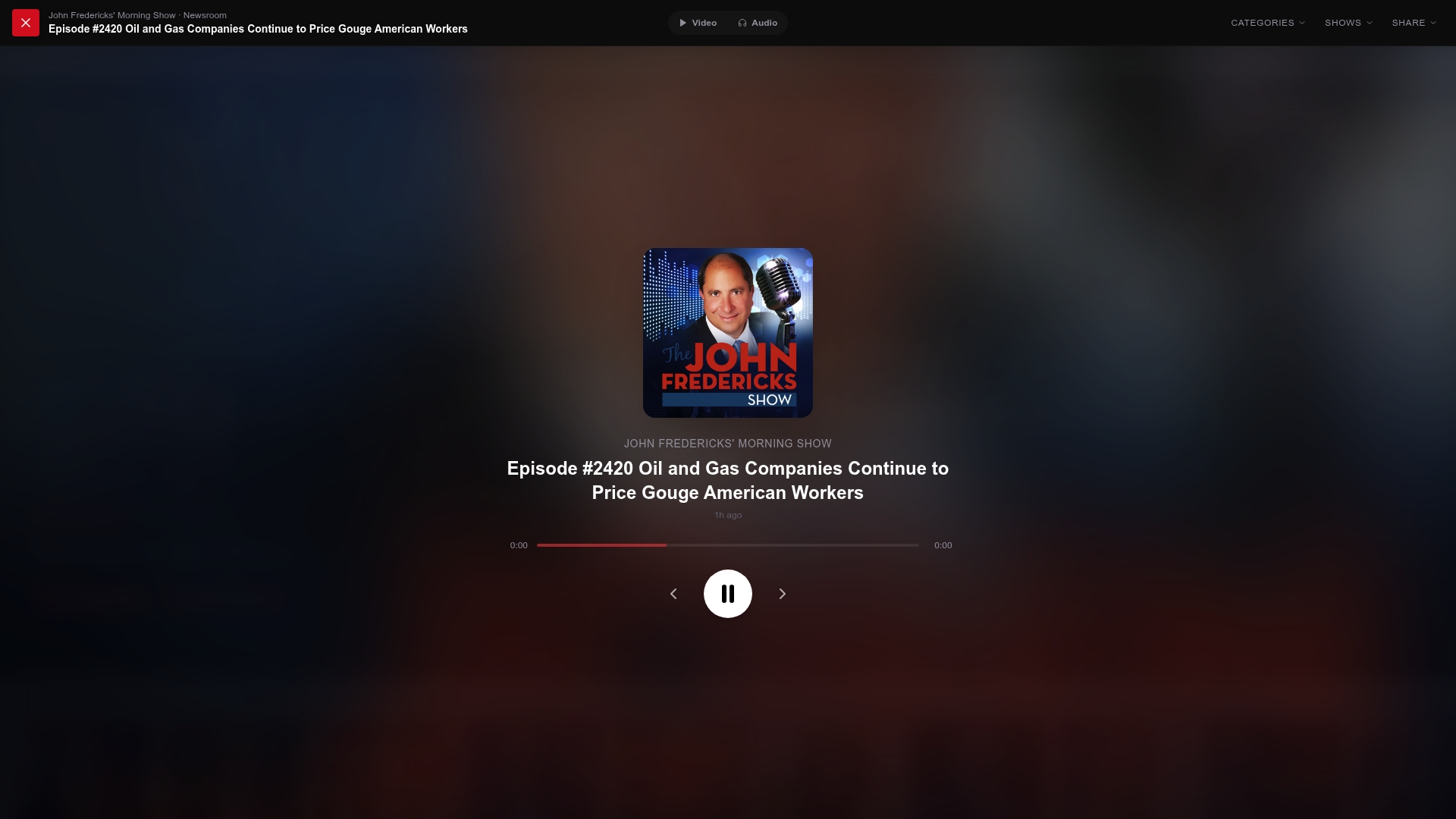
If you would rather start with one show, try Firewall with Lance Wallnau or The Road Forward with Tim Clinton, then come back to the directory when you want more variety.
A simple four-week listening plan
If you are starting from zero, this plan keeps things manageable.
Week 1: Sample. Listen to one episode each from three different shows. Note the tone, the length and whether you learned anything.
Week 2: Narrow. Drop the show that felt like the worst fit. Pick the newest two episodes from the other two.
Week 3: Add a lens. Add one show from a different type. If you started with commentary, try something more reflective. If you started with faith and values, add a news-cycle program.
Week 4: Decide. Keep two or three shows as your regular rotation. Set a recurring time for each. Review your notes and pick one action.
That is a rotation you can maintain for a year without burning out, and it leaves room to swap shows as your business and interests change.
Common mistakes to avoid
- Subscribing to everything. Twenty subscriptions become a backlog and a guilt pile. Keep a short list.
- Treating every host as an authority on your industry. A host may be sharp on politics and have no experience in your field. Take ideas as input, then verify with a professional such as your accountant, attorney or benefits adviser before acting on tax, legal or employment matters.
- Listening only to agreement. Even if you prefer a conservative lens, notice when a host makes a claim without support. The best shows hold up when you check them.
- Skipping the notes. Without a note, an episode is just pleasant noise.
FAQ
Are there podcasts made only for conservative entrepreneurs?
Very few. Most shows that serve this audience are political, faith-based or current-affairs programs that cover business topics along the way. That is why building a mix of two or three shows usually works better than looking for one perfect match.
How do I know if a conservative podcast is still active?
Check the date of the newest episode and compare it with the release pattern in the older ones. If episodes stop for months, move on. On GOPcast you can browse shows and listen to recent episodes in one place, which makes this check quick.
Do I need to pay to listen?
Not on GOPcast. The shows linked in this article are free to listen to on the site. Individual hosts may offer their own paid extras elsewhere, so check each show’s own pages if you are interested.
How many podcasts should a busy business owner follow?
Two to four is a realistic number. Pick one that covers policy or the news cycle, one that offers reflection or values, and optionally one interview-style program. If you fall behind, cut one rather than listening at double speed.
Can I rely on a podcast for tax or legal decisions?
No. Use podcasts to learn what questions to ask, then take them to a certified public accountant, an attorney or the relevant agency. Rules change, and your situation is specific.